
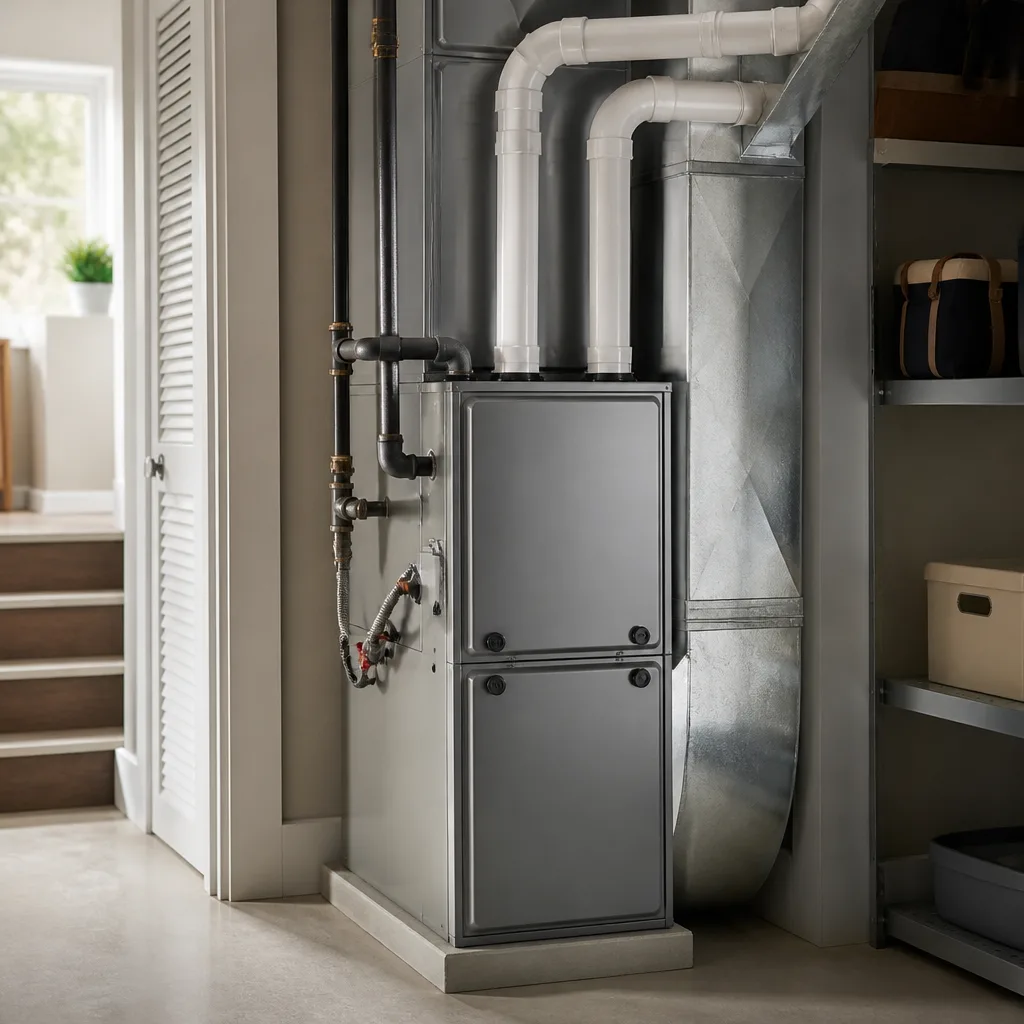
 Furnace & heating
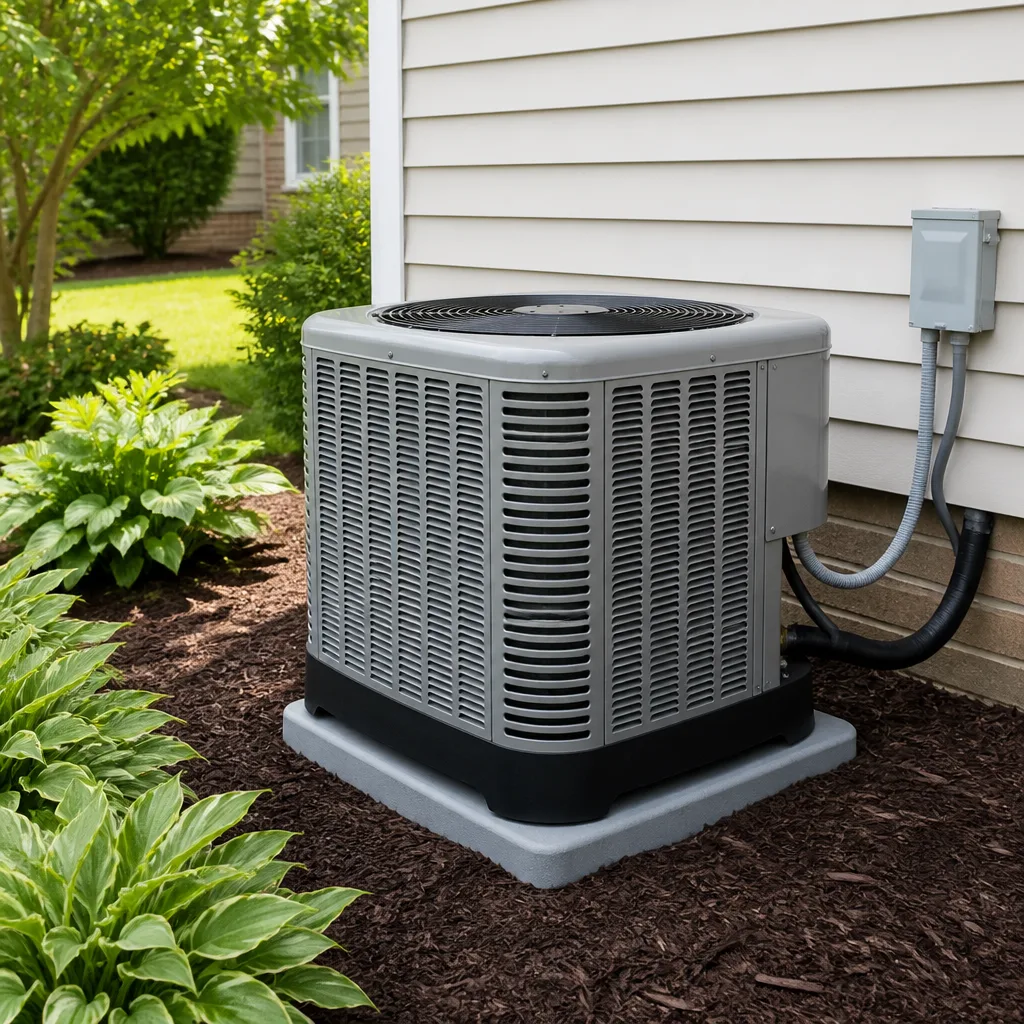 AC repair
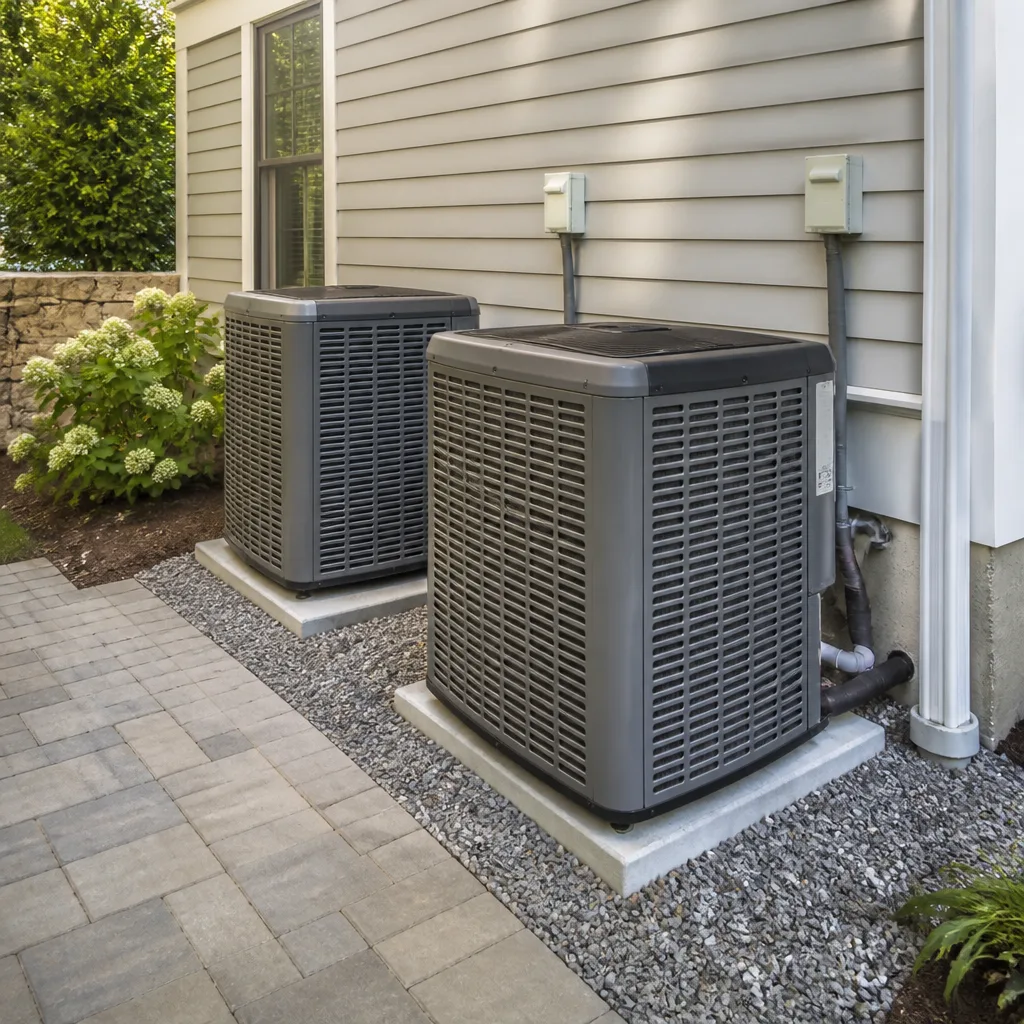 Heat pumps
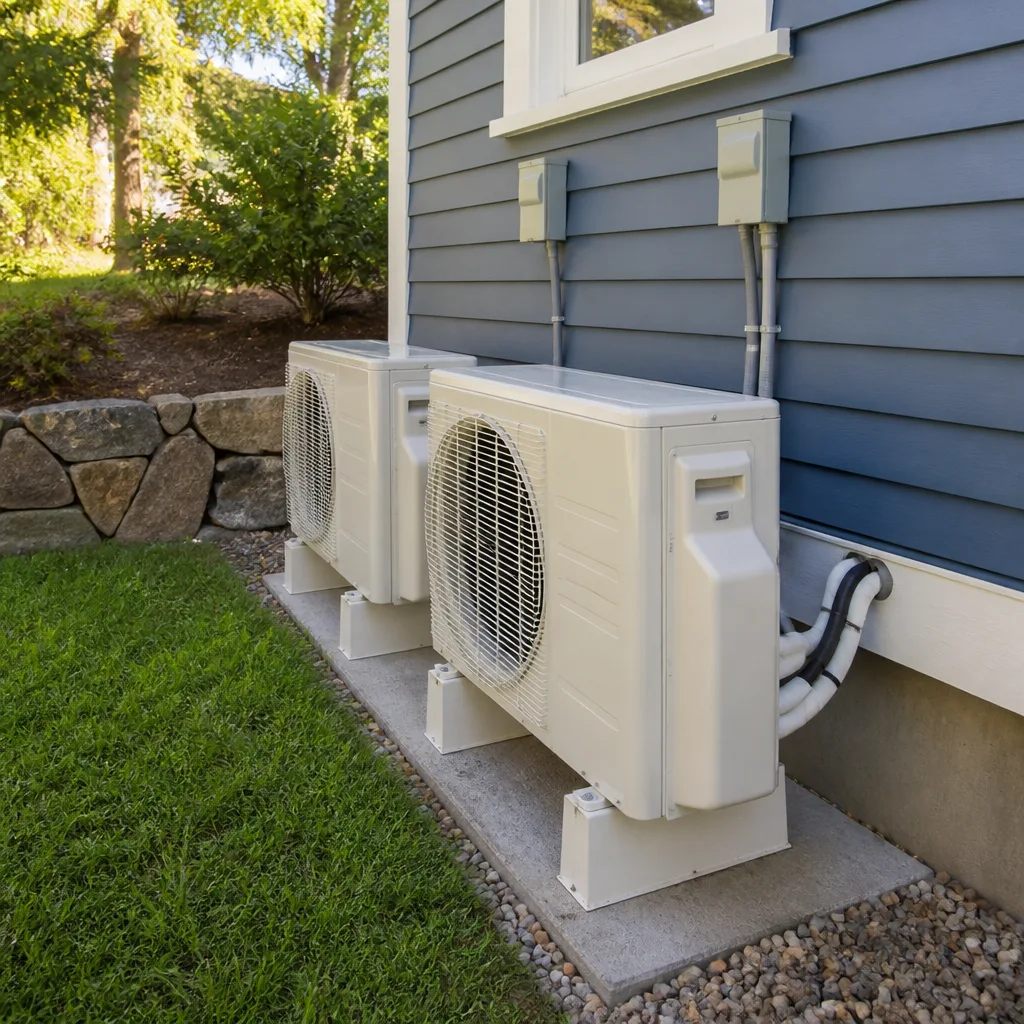 Ductless mini splits
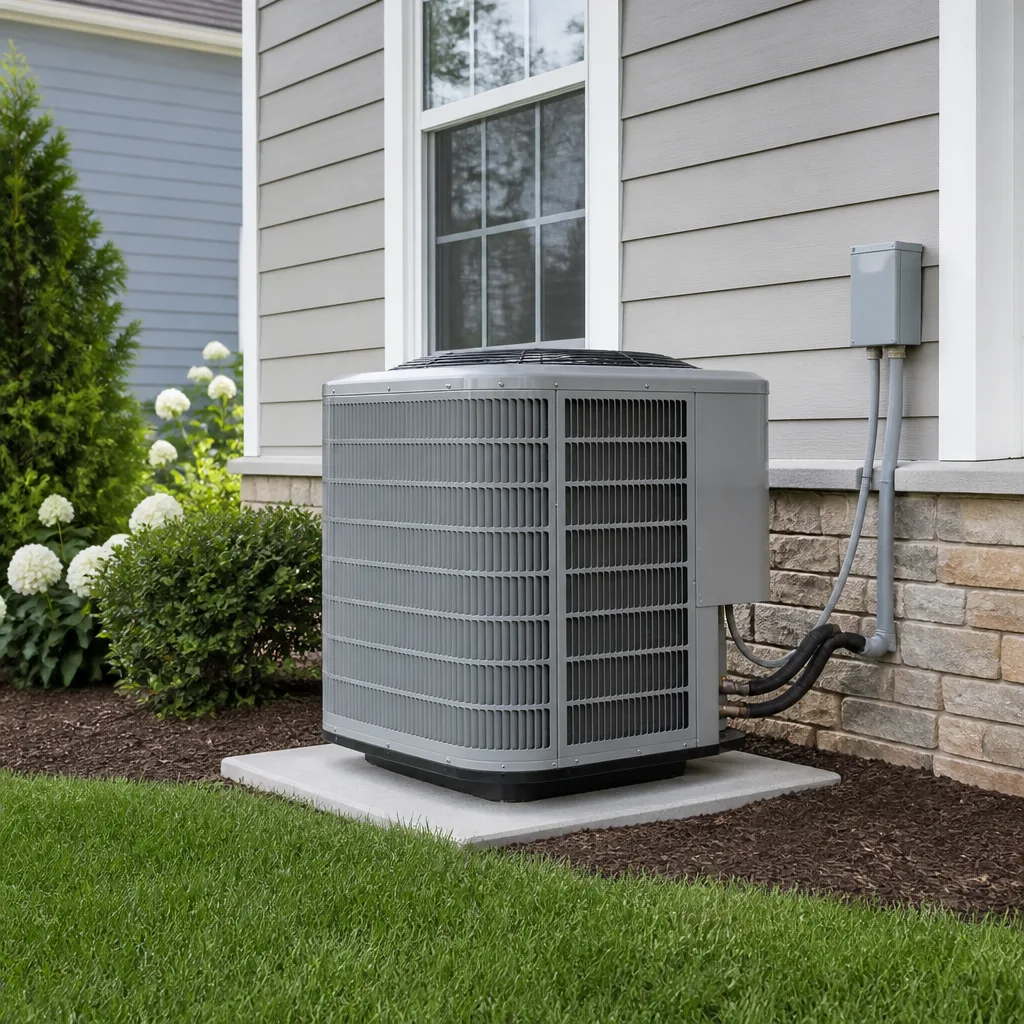 Carrier
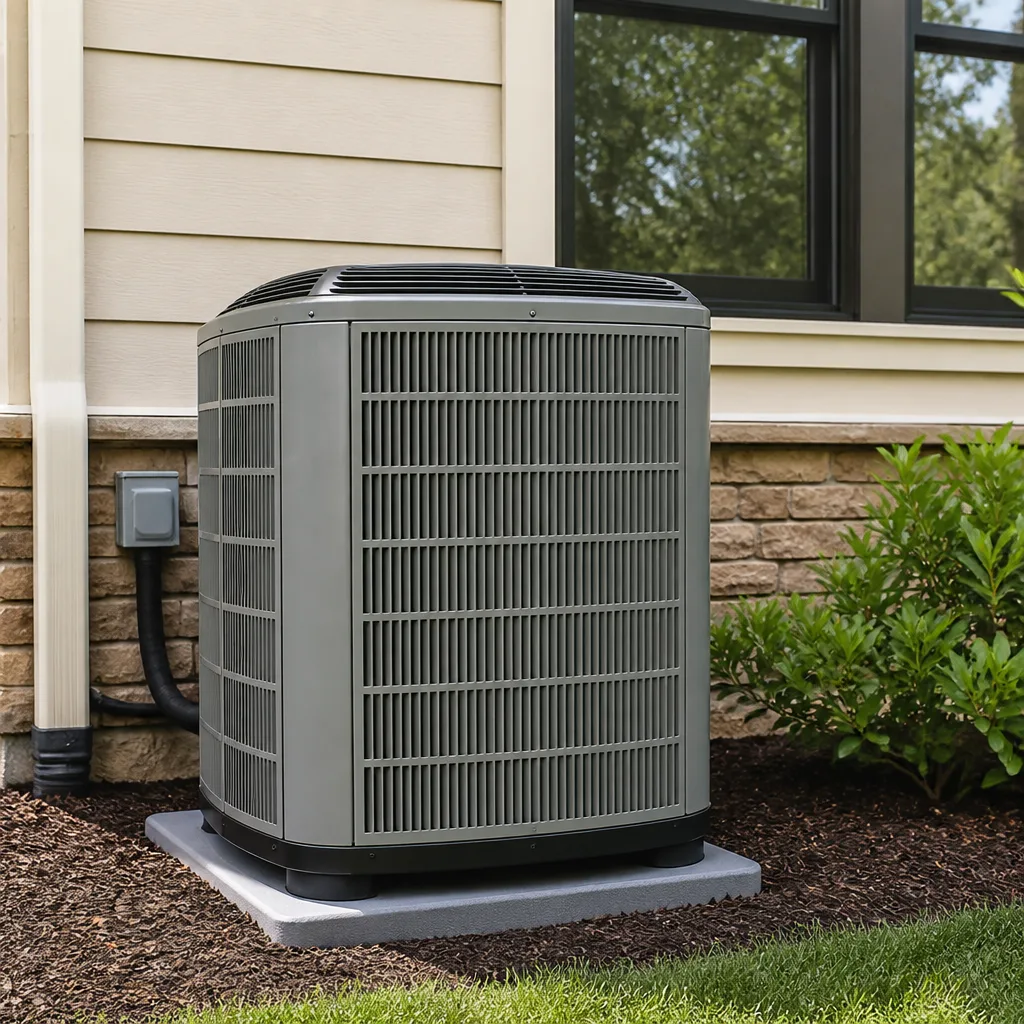 Trane
Trane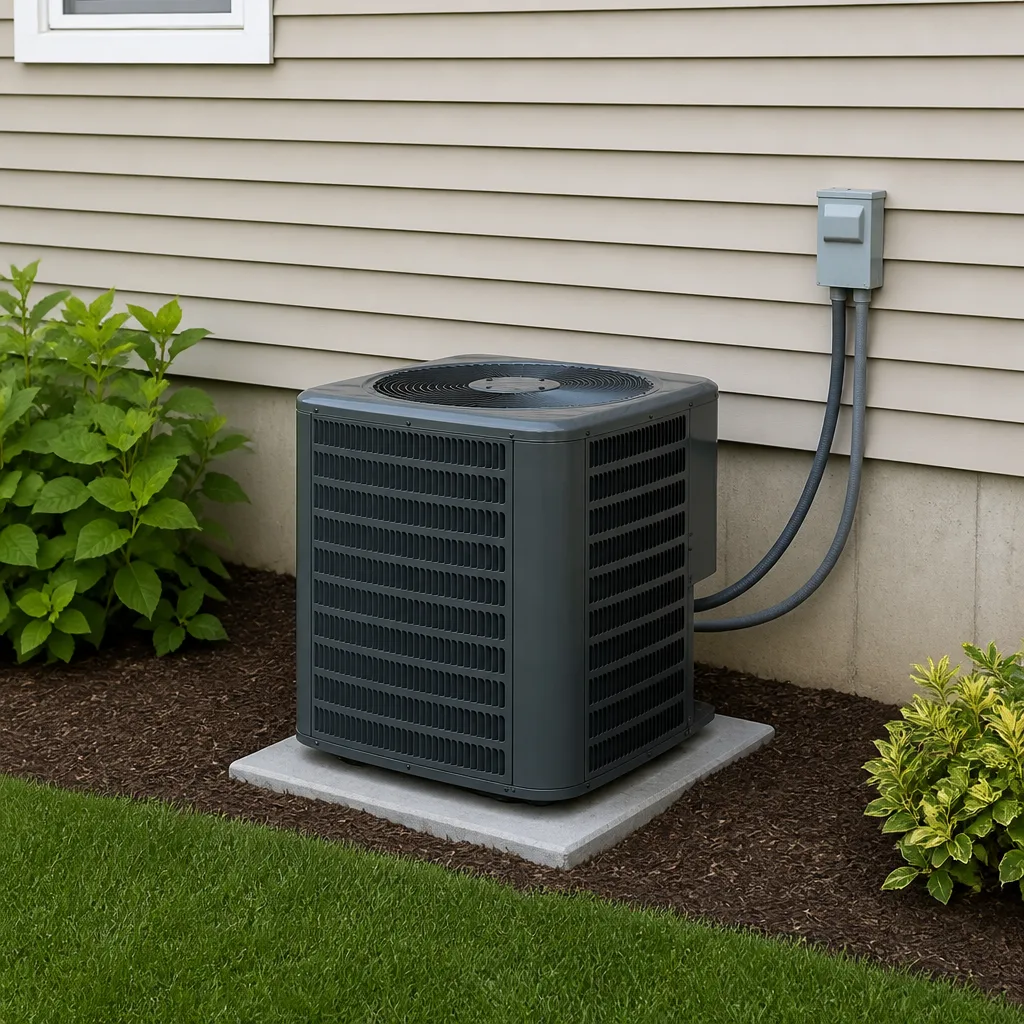 Goodman
Seasonal tune-up and full diagnostic on your Carrier, Trane, or Goodman system - readings shown to you before any repair is proposed
Diagnosis first, numbers second - you approve the repair price before a single part goes in.
Get your free estimateCarrier Capacitor Replacement: The San Jose Owner’s Guide
We keep Carrier-compatible capacitors on our trucks, so most San Jose homes get a same-day replacement. The full job usually runs $175 to $310, parts and labor included, and every capacitor we install carries our 365-Day Done Right Promise in writing. Most folks discover the problem on a hot afternoon when the outdoor unit hums but the fan won’t spin, or the compressor clicks and gives up.
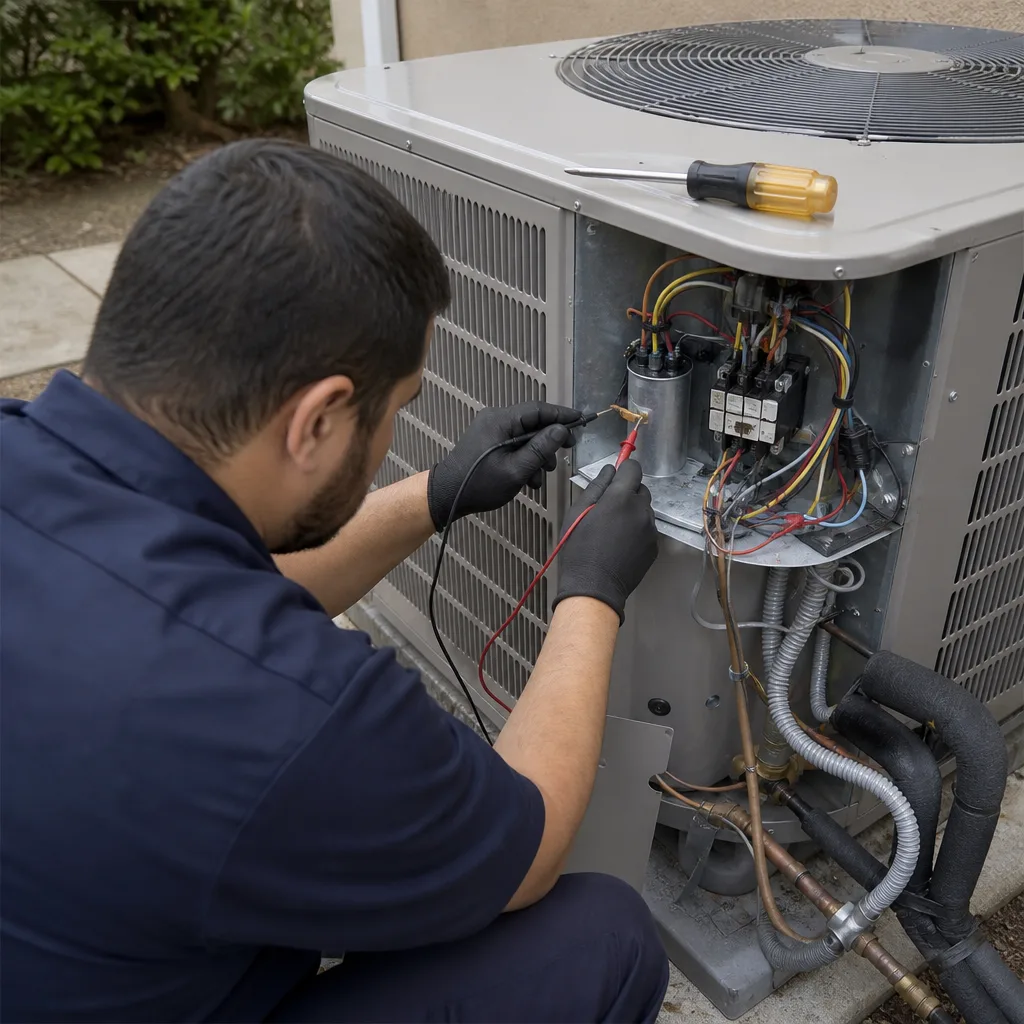
A capacitor is the electrical kick-start your Carrier system needs to get the compressor and fan motor turning. When it weakens, the system strains, overheats, or simply won’t start. We can usually swap one out in under an hour once we’ve confirmed the diagnosis with a meter.
Key Takeaways
- Typical installed cost in San Jose: $175 – $310 for a Carrier-compatible capacitor, labor included
- Same-day service is available most days; our trucks carry the common Carrier capacitor sizes
- Every repair is guaranteed for 365 days in writing – if it fails, we return and fix it at no charge
- You get the written price before any work begins, so there are no door surprises
Which Carrier Models This Applies To
Carrier uses capacitors across nearly every residential line: the Comfort series, Performance series, Infinity series, and older models like the 24ABC, 24ACC, and 38-series condensers. The part itself is not exotic, but matching it matters. Capacitors are rated by microfarads (µF) and voltage: your unit might call for a 35/5 µF dual capacitor at 440 volts, or a 45/5, a 40/5, or a 70/5 depending on the compressor and fan motor specs. A 35/5 and a 40/5 look almost identical, and a handyman who grabs one from a hardware shelf without checking the label can leave you with a compressor that runs hot and fails early.
We recommend OEM Carrier capacitors when the unit is under warranty or when originality matters to you, but we also stock quality American-made aftermarket equivalents that meet or exceed the same specs and usually cost less. Cold Harbour Heating and Air San Jose is an independent service provider, not a Carrier dealer, so we’re free to choose the part that makes the most sense for your system and budget.
Here’s a compatibility gotcha we see in San Jose: many Carrier units in the South Bay were installed in the 1990s and early 2000s with 370-volt capacitors. Modern replacements are often 440-volt rated, which is fine and actually longer-lasting, but an old 370-volt capacitor that’s past its service life can bulge and leak dielectric fluid without tripping a breaker. The system will still run, just poorly, until it fails completely.
Styles & brands we work with
Signs Your Carrier Capacitor Replacement Is Failing
- Humming outdoor unit, fan not spinning. The capacitor has lost the ability to get the fan motor moving. The compressor may still try to run, but without airflow, it overheats fast. This is the most common failure pattern we see in San Jose’s summer heat.
- AC blows warm air. The compressor can’t start without a strong capacitor kick, so the refrigerant never circulates. You’ll feel the indoor fan running but the air never gets cold.
- Intermittent starts or hard starting. The unit starts fine on cool mornings but struggles or fails during peak afternoon heat. Capacitors lose capacity gradually, and hot weather exposes the weakness.
- Bulging, swollen, or leaking capacitor housing. If you open the condenser panel and the capacitor looks puffed up like a soda can or has oily residue on top, it’s done. No meter needed. We replace these on sight.
- System shut down with a breaker trip, then won’t restart. A failing capacitor forces the compressor to draw excessive current. The breaker protects the system, but the underlying cause is the capacitor, not the breaker.
See the difference
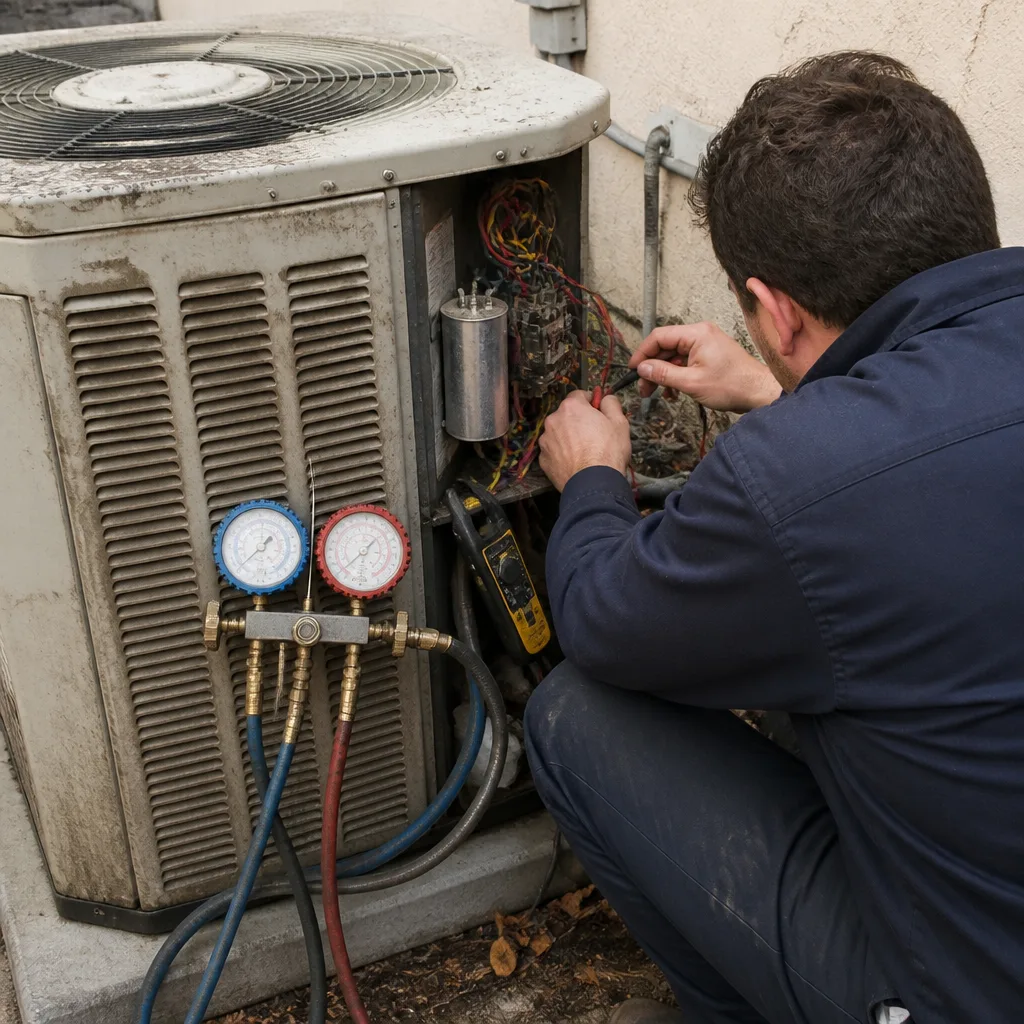 Before
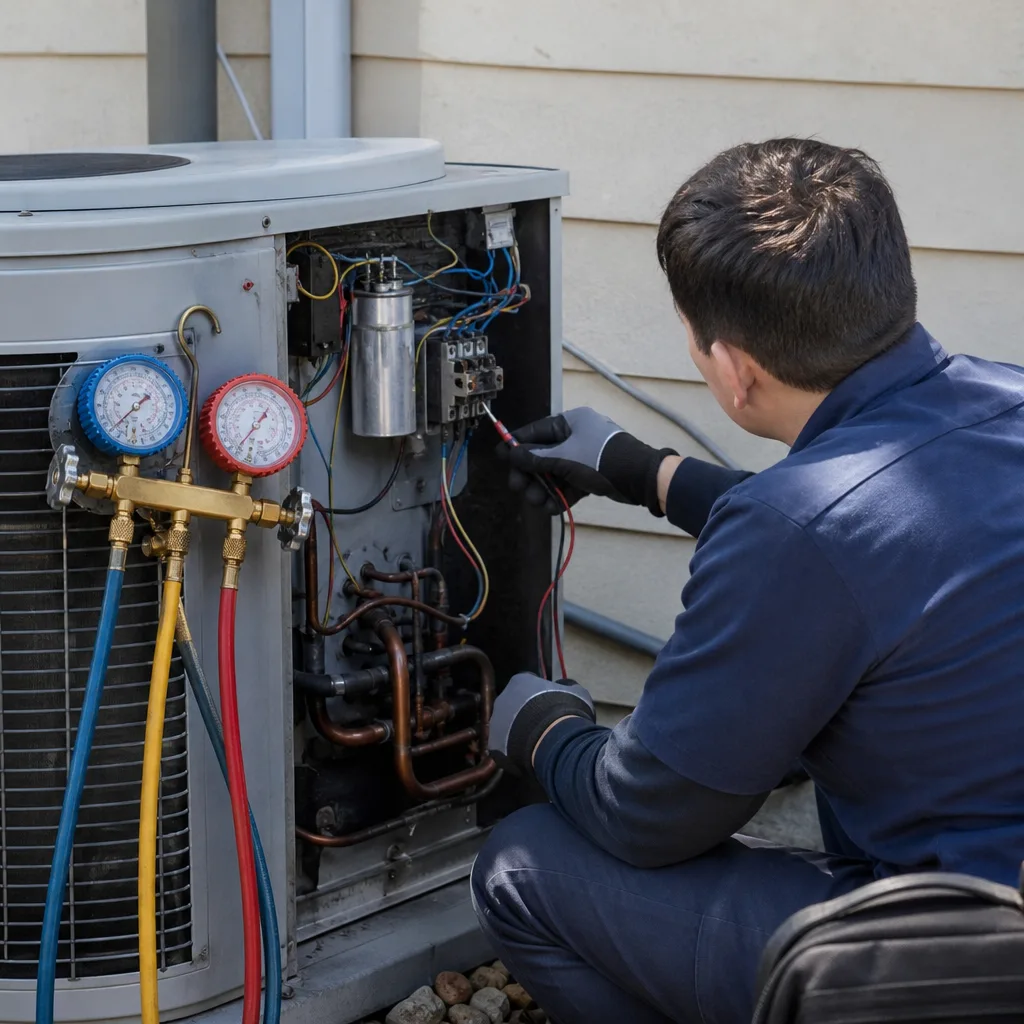 After
After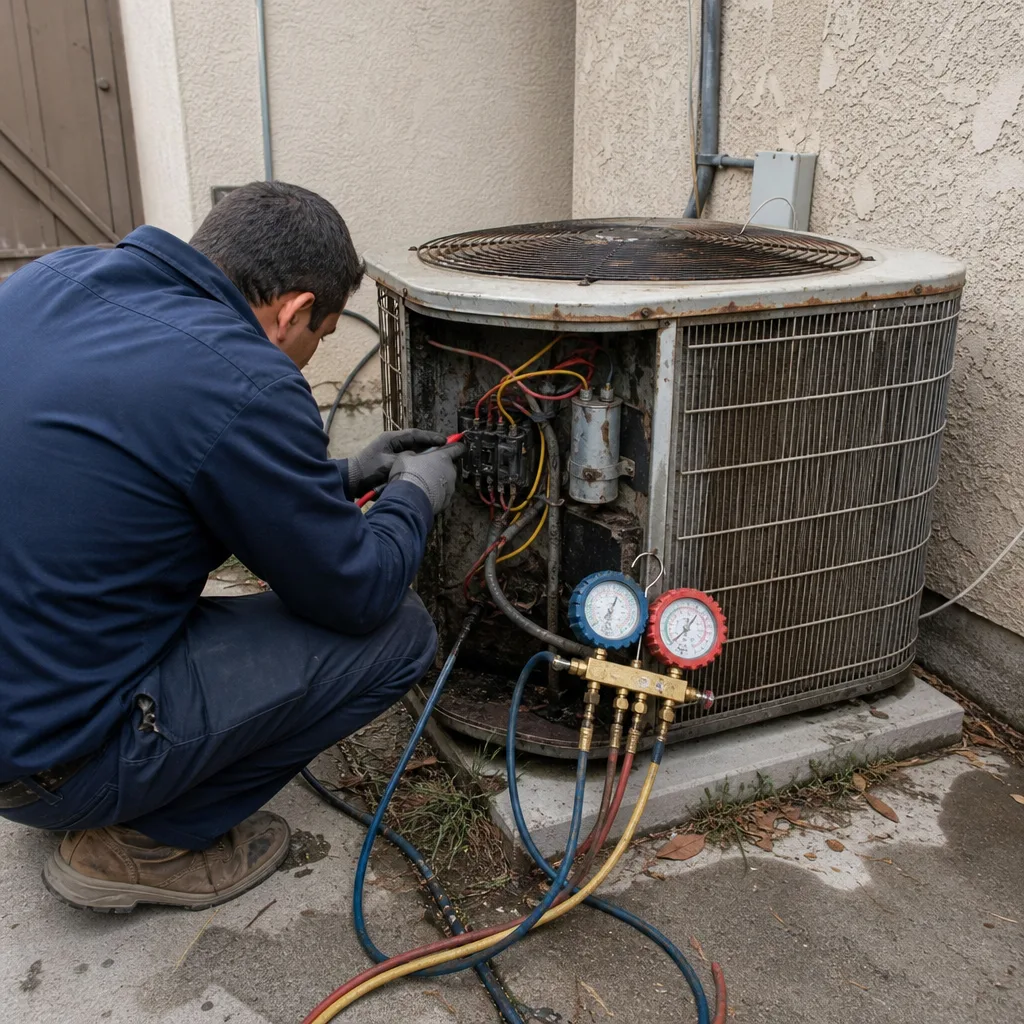 Before
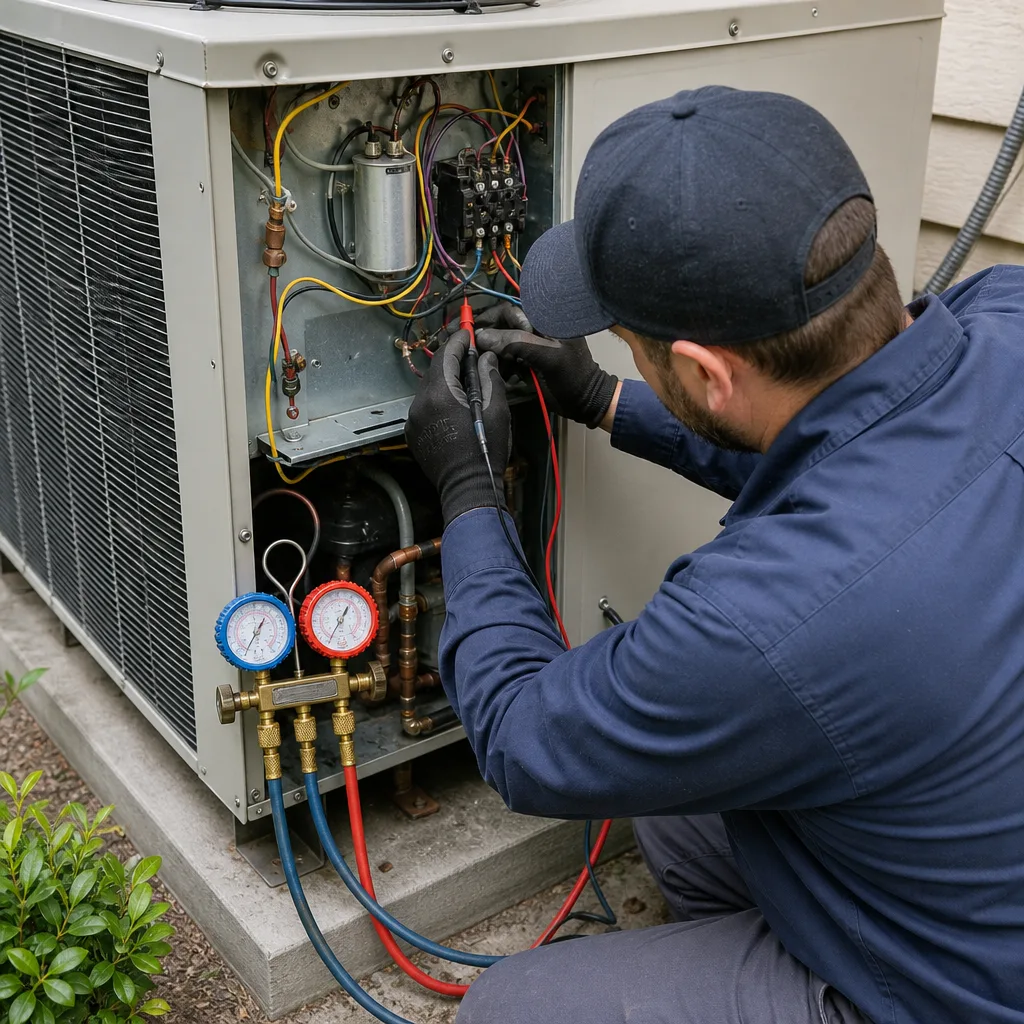 After
After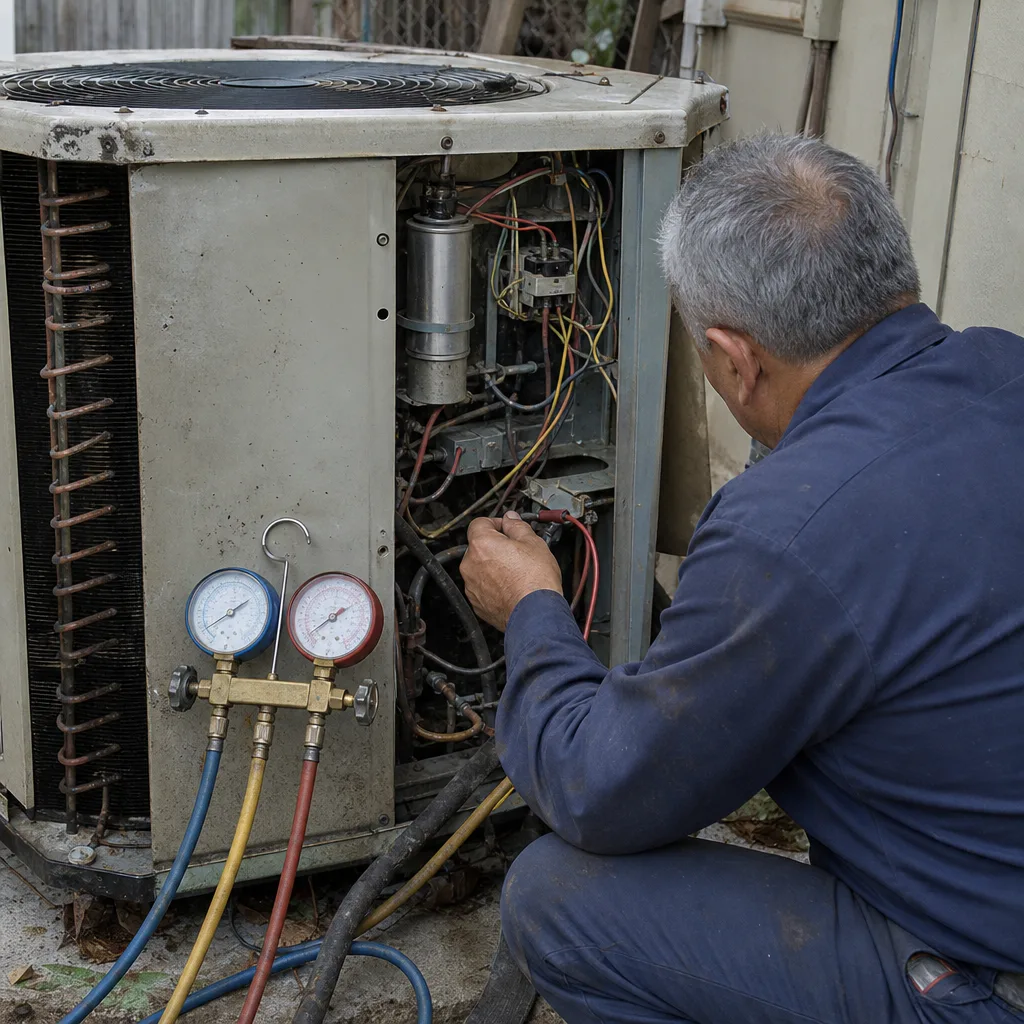 Before
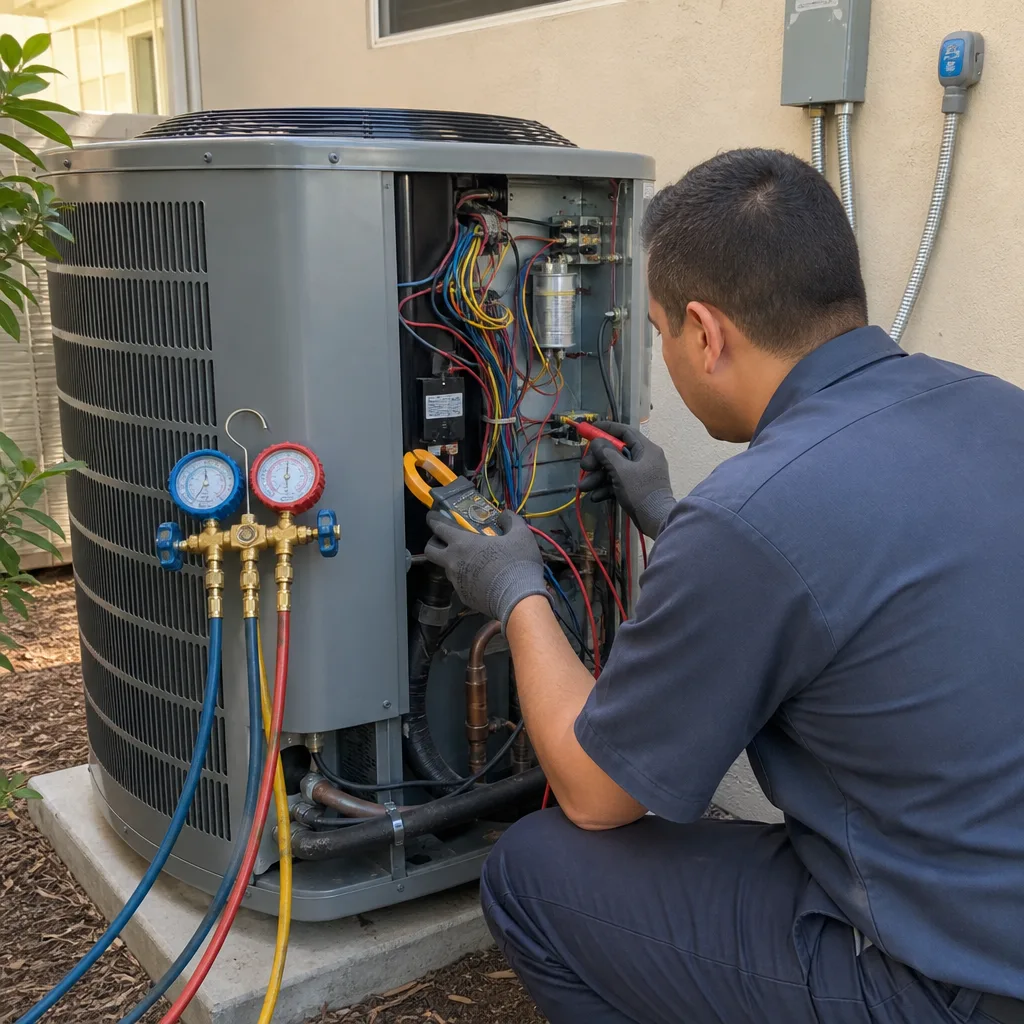 After
AfterReplacement Cost & What’s Included
In San Jose, a Carrier capacitor replacement runs $175 to $310 installed, and the price is written down and handed to you before any work starts. The capacitor itself is typically $25 to $85 depending on the spec, and the rest is labor, diagnosis, and our guarantee. Most jobs fall in the $200 to $260 range for a standard dual capacitor on a common Carrier model.
What drives the price up: harder-to-reach condenser cabinets, Carrier models with proprietary mounting brackets, or systems that need a second capacitor for the indoor blower. What’s included regardless: we confirm the old capacitor’s rating with a meter, install the correctly matched replacement, test the compressor and fan motor start-up under load, and leave you with a written 365-day guarantee. You’ll know the exact price before we open our toolbox, and it doesn’t change at the door. That’s The Kingswell Way: say the price before the work, do the work, leave the place cleaner than we found it, and come back if it fails.
DIY or Call Us?
We’re honest about this: replacing a capacitor is not a beginner DIY job. Capacitors store an electrical charge even when the power is off, and a charged capacitor can deliver a serious shock. If you don’t know how to safely discharge one, don’t open the condenser cabinet. The cost of a service call is a lot less than an emergency room visit or a burned compressor from a wrong-size part.
What you can safely do: check your thermostat settings, confirm the breaker is on, and listen. If the outdoor unit hums but won’t start, that’s a capacitor symptom, not a thermostat issue, and it won’t fix itself. Call (669) 800-4179 and tell us what the system is doing. Victor Mancini keeps a logbook of every job, and we’ll ask the right questions so the technician arrives with the correct capacitor already on the truck.
FAQs
Most Carrier capacitors last 5 to 10 years in San Jose’s climate, though units closer to the coast see less stress than inland neighborhoods like Evergreen or Berryessa where summer temperatures climb. Heat is the capacitor’s enemy, and San Jose’s warm season shortens lifespan compared to cooler coastal cities. If you’re past 8 years on the original part, it’s borrowed time.
No, capacitors are sealed components and cannot be repaired. Once the dielectric material inside degrades or the housing bulges, the only fix is replacement. Rebuilding one would cost more than a new one even if it were possible. Call (669) 800-4179 and we’ll confirm what’s actually failed before recommending anything.
Most Carrier capacitor replacements take 30 to 60 minutes from start to finish. That includes confirming the diagnosis, discharging the old capacitor safely, installing the new one, and testing the system under load. We’ll give you a firm arrival window when you book, and we show up inside it.
Yes, our San Jose trucks carry the common Carrier dual capacitor sizes: 35/5, 40/5, 45/5, 50/5, and 70/5 at 440 volts, plus a selection of smaller run capacitors for indoor blowers. For less common sizes or older Carrier models, we can have the part same day from our local supply house. We also stock parts for Trane and Lennox systems, so the technician who arrives can handle whatever we find.
Written by Victor Mancini, Owner, Cold Harbour Heating and Air San Jose at Cold Harbour Heating and Air San Jose, serving San Jose and nearby areas.