
Last updated October 16, 2026
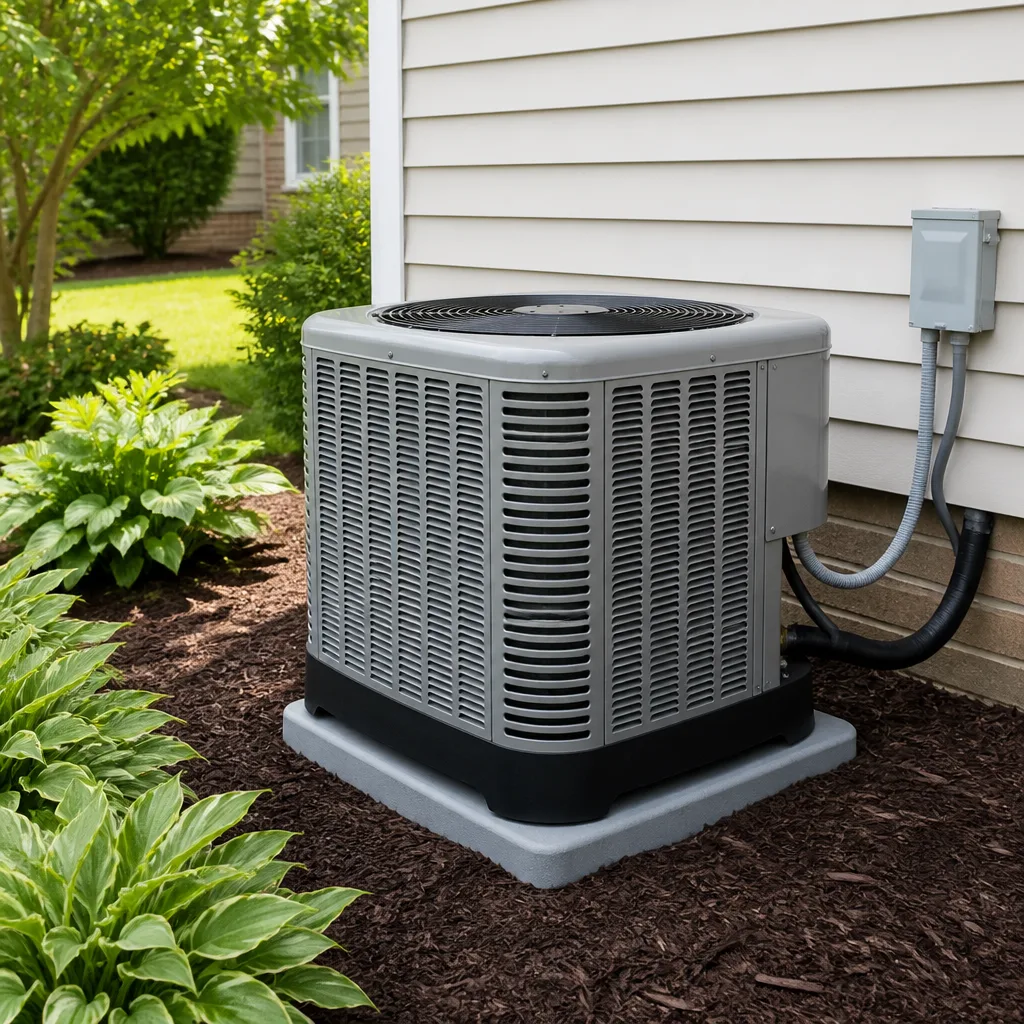 AC repair
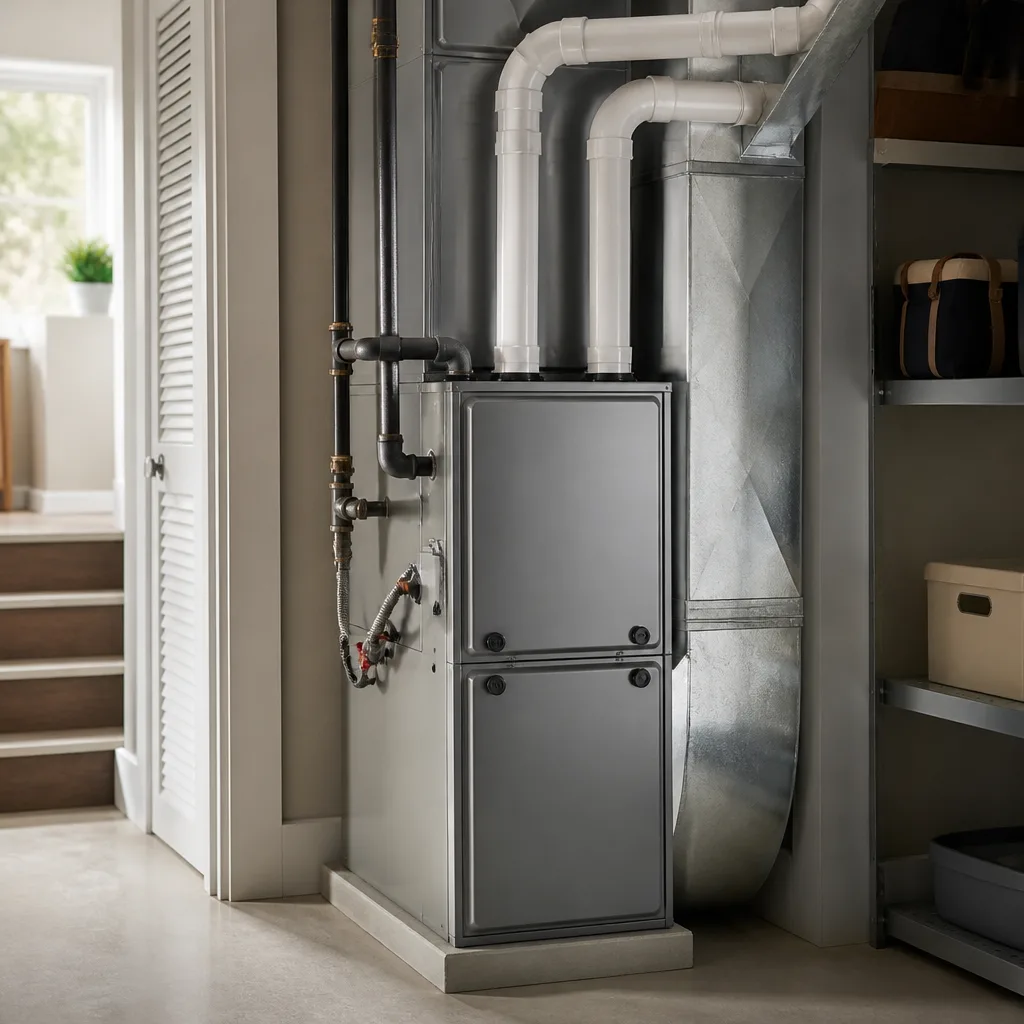 Furnace & heating
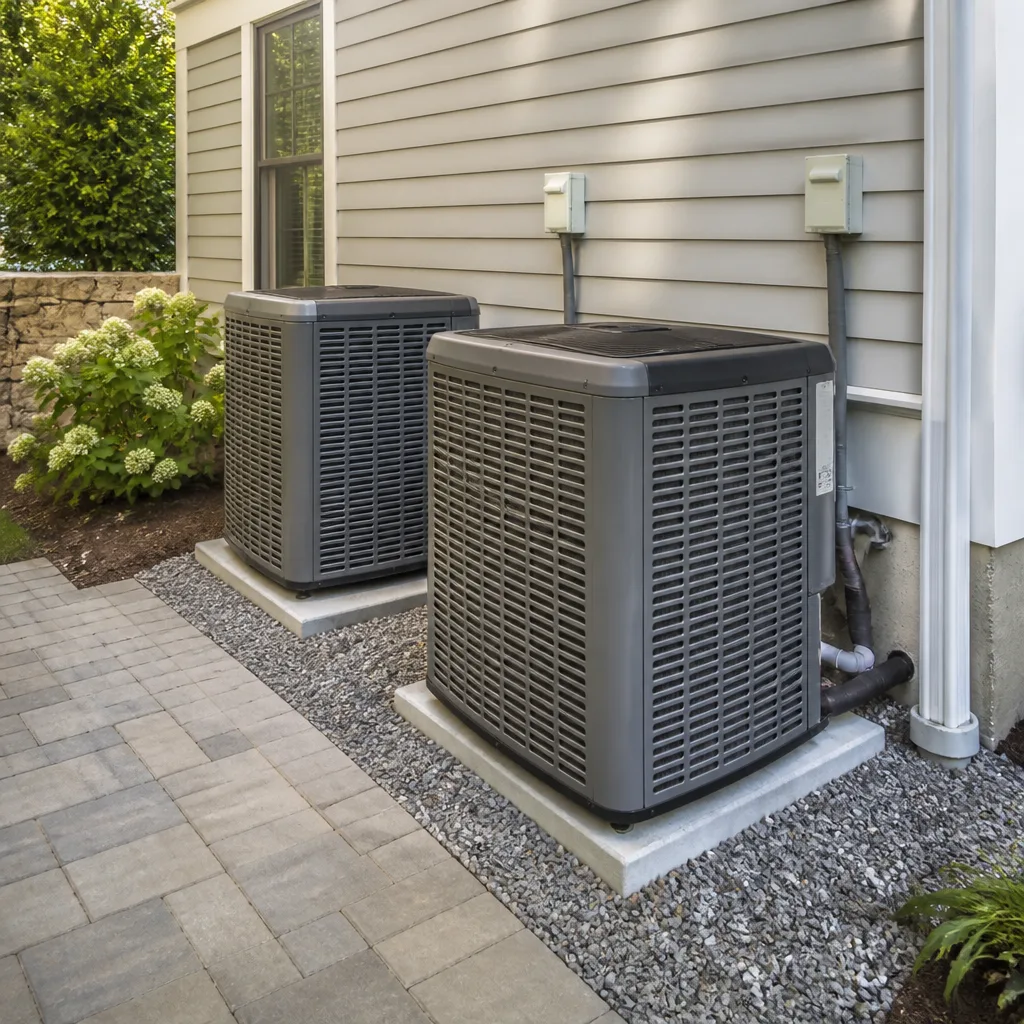 Heat pumps
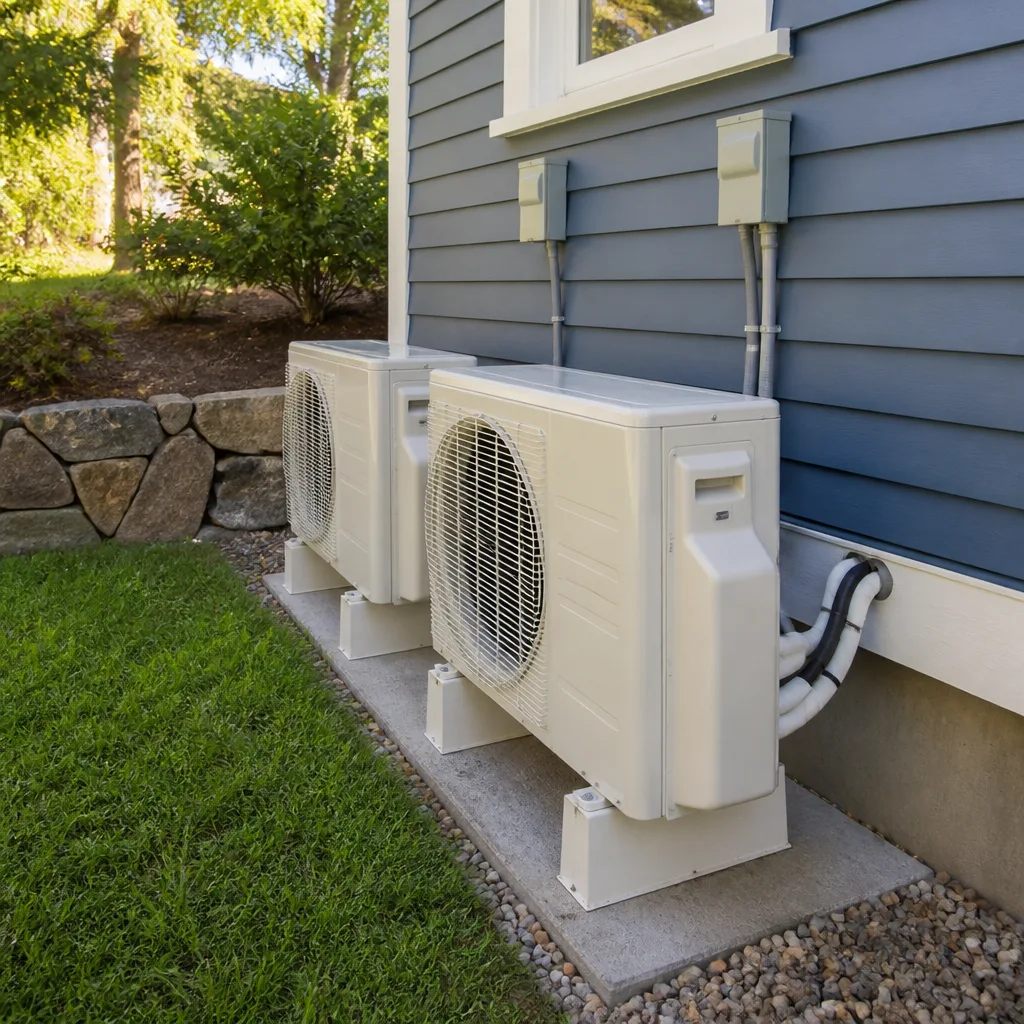 Ductless mini splits
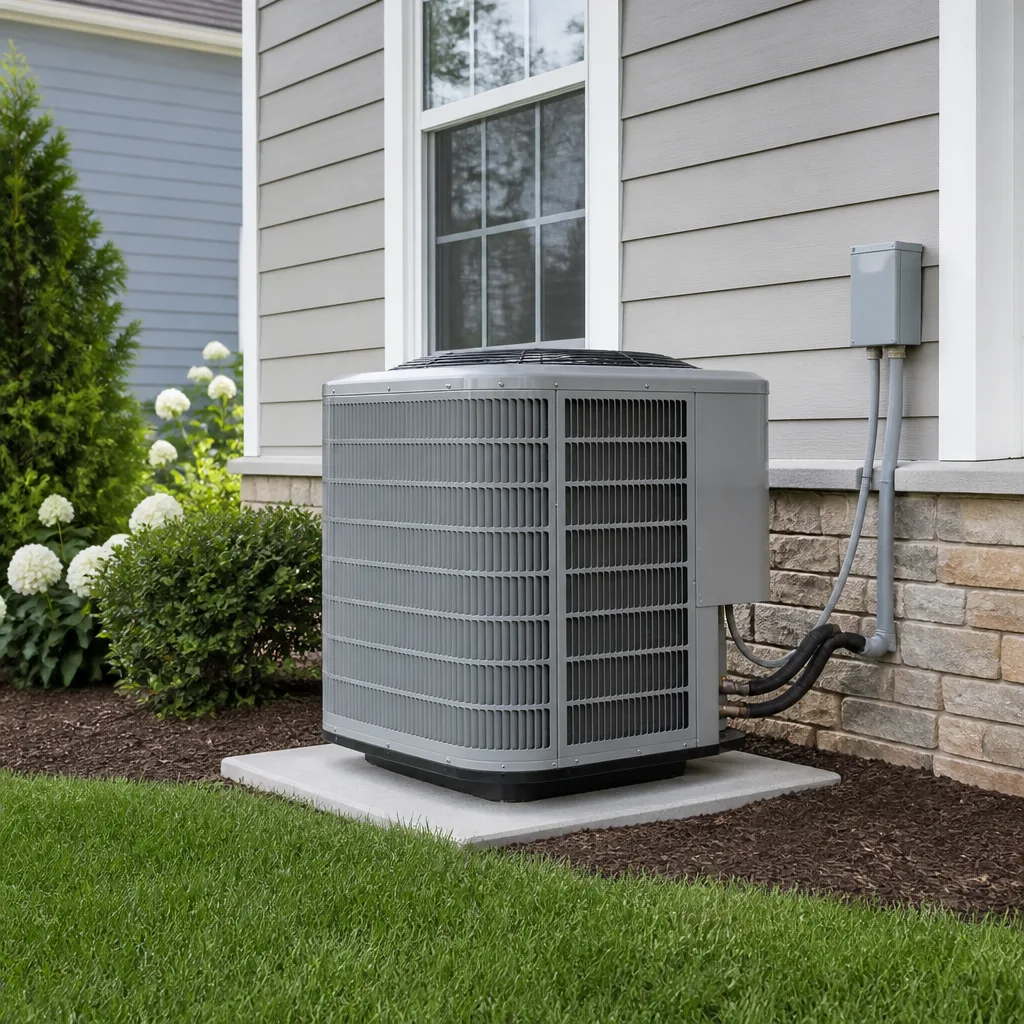 Carrier
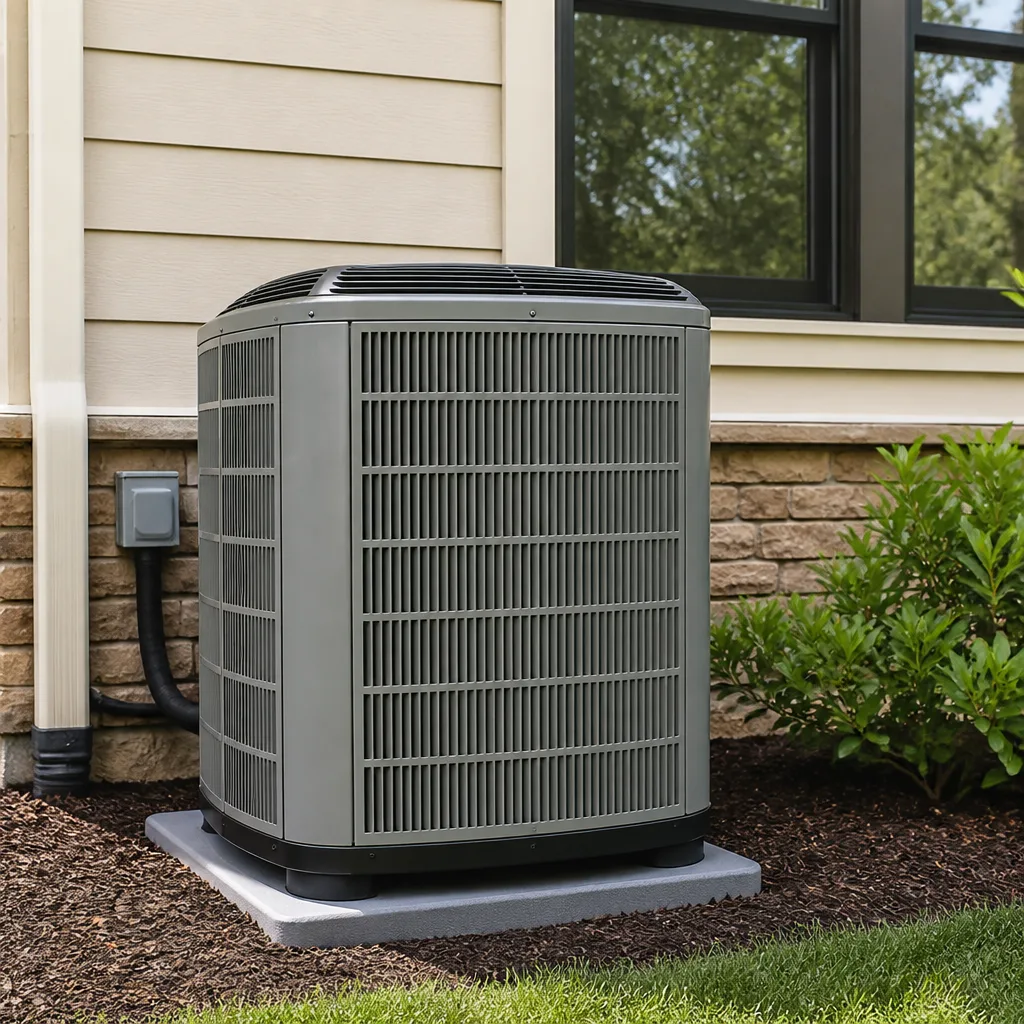 Trane
Trane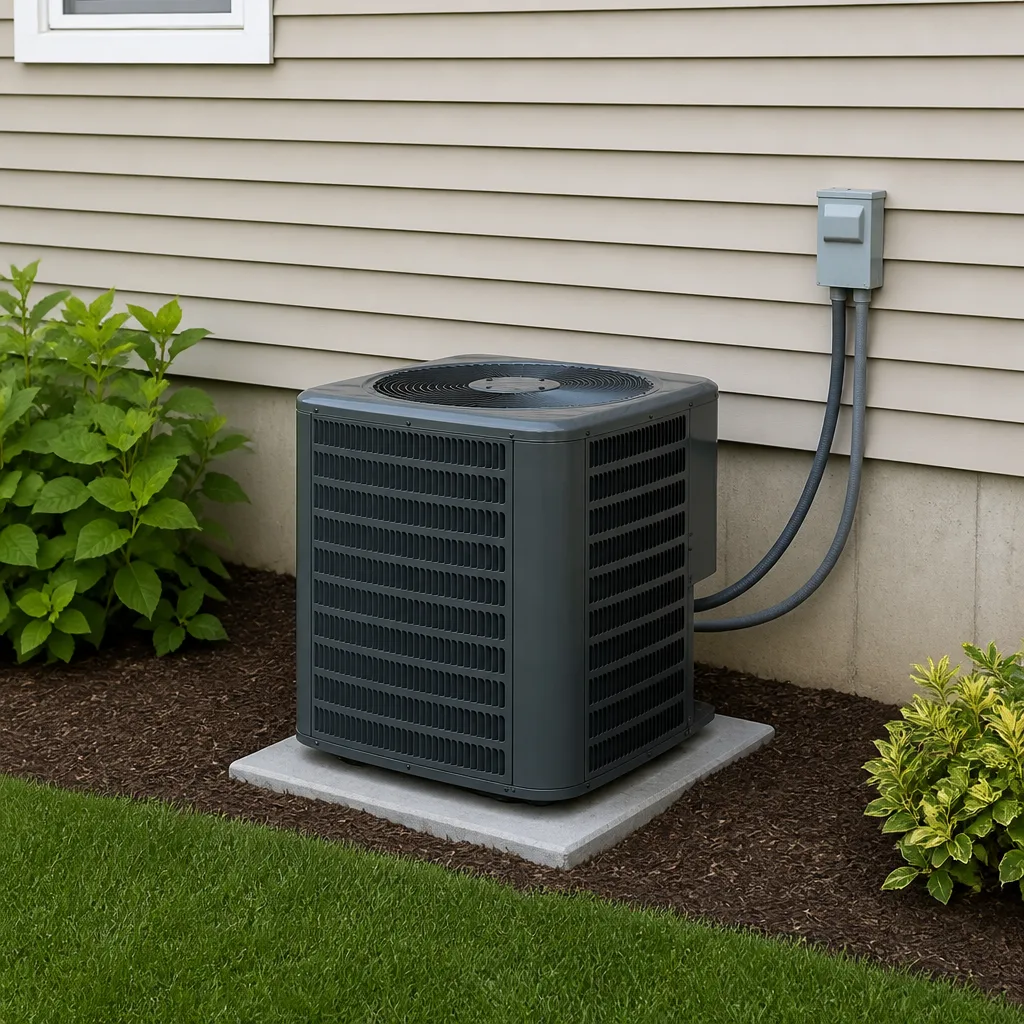 Goodman
Seasonal tune-up and full diagnostic on your Carrier, Trane, or Goodman system - readings shown to you before any repair is proposed
Diagnosis first, numbers second - you approve the repair price before a single part goes in.
Get your free estimateHVAC Permits, Codes & Inspections in CA: What You Need to Know
In 2022, a homeowner in San Jose’s Willow Glen neighborhood replaced a 22-year-old furnace without pulling a city permit. The job looked clean, the heat worked, and everyone moved on. Two years later, the house went into escrow and the buyer’s inspector flagged the unpermitted appliance. The deal collapsed, the sale price dropped by $14,000, and the seller ended up paying for a retroactive permit, double inspection fees, and a city fine before the house finally closed. The permit itself would have cost around $180 and one inspection appointment. This guide explains every layer of California’s HVAC permitting system so you never end up in that position.
By the time you finish reading, you’ll know which San Jose HVAC jobs require a permit, what Title 24 compliance actually demands, why an electrical permit often rides along with a mechanical one, how to confirm your contractor pulled permits before work starts, and what documentation you should keep with your deed for the next 20 years. For related reading, see our HVAC Warning Signs: A San Jose Homeowner’s Reference Guide.
Quick Answer
Most HVAC equipment replacements in San Jose require a mechanical permit from the City of San Jose, and many also require a companion electrical permit. Permit fees typically run $150 to $400 depending on the scope of work. Title 24 energy compliance is mandatory for nearly all residential HVAC installations and replacements. You, as the homeowner, are legally responsible for ensuring permits were pulled even when a contractor handles the paperwork, and the record belongs with your property documents for as long as you own the home.
Styles & brands we work with
Table of Contents
- What Actually Requires a Permit in San Jose
- The Difference Between a Mechanical Permit and an Electrical Permit
- Title 24 Energy Compliance in Plain English
- Who Is Responsible for Pulling the Permit
- How to Confirm Your Contractor Pulled Permits Before Work Begins
- What Happens at a Final Inspection
- What HVAC Permits Cost in San Jose
- Common Mistakes to Avoid
What Actually Requires a Permit in San Jose
The City of San Jose requires a mechanical permit for most HVAC work that changes, replaces, or installs equipment. Here’s a practical breakdown of what falls on which side of the line, based on what we’ve handled across San Jose neighborhoods from Almaden Valley to Berryessa.
Work that requires a City of San Jose mechanical permit:
- Replacing a furnace, air conditioner, or heat pump with a new unit of any efficiency rating
- Installing a new HVAC system in a home that did not previously have one
- Relocating an existing furnace, air handler, or condenser to a different part of the home
- Adding or substantially modifying ductwork, including new supply or return branches
- Converting from one fuel source to another, such as electric to gas or gas to heat pump
- Installing a mini-split system, whether single-zone or multi-zone
Work that generally does not require a mechanical permit:
- Replacing a thermostat with a new unit using the same wiring configuration
- Changing a standard air filter or media filter
- Cleaning condenser coils or evaporator coils as part of routine maintenance
- Replacing a capacitor, contactor, or igniter on an existing system
- Adding refrigerant to a system that is low (though the leak itself should be found and repaired)
San Jose’s climate makes this distinction matter. Our cooling season runs from May through October, and homes in neighborhoods like Evergreen and the Rose Garden routinely cycle their AC units 8 to 10 hours a day during heat waves. See our Seasonal HVAC Care for San Jose: Year-Round Homeowner’s Guide for maintenance tips that keep systems running through peak demand. A permit ensures the equipment was installed to handle that load safely and that the electrical connection meets current code rather than relying on wiring sized for a unit from 1999.
The city enforces the California Mechanical Code, which incorporates the Uniform Mechanical Code with state amendments. What this means for you is simple: the rules that apply in San Jose are the same rules applied in Los Angeles, Sacramento, and Fresno, with local filing procedures and fee schedules layered on top. If a contractor tells you a permit costs too much or takes too long, they’re telling you about their schedule, not the city’s. We pull permits on San Jose equipment replacements as a standard part of the job, not an optional add-on.
State-level compliance filings also apply in specific situations. Cal/OSHA regulates workplace safety for the technicians doing the work, and the California Energy Commission enforces Title 24 energy standards that apply to nearly every residential HVAC installation. Neither of these replaces a city permit, and having one does not satisfy the other.
The Difference Between a Mechanical Permit and an Electrical Permit
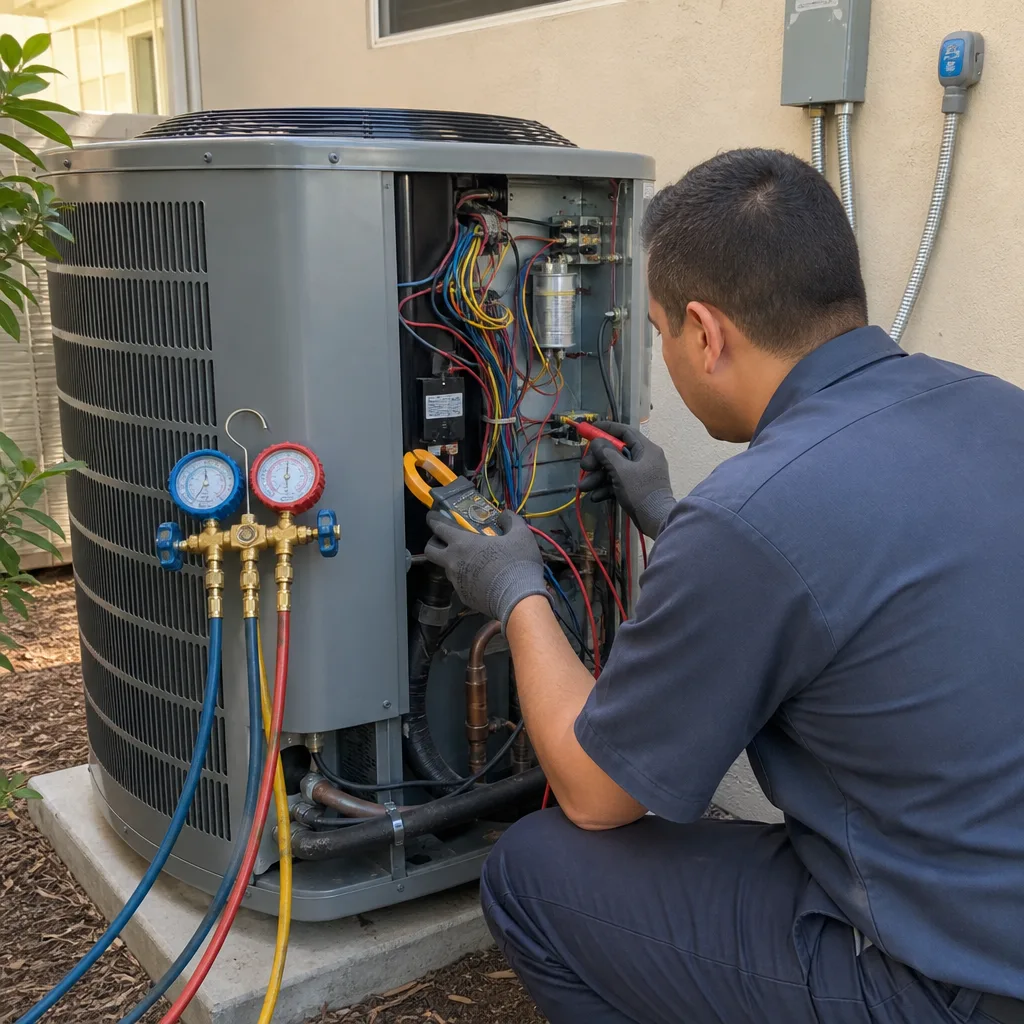
A mechanical permit covers the HVAC equipment itself: the furnace, air conditioner, heat pump, coil, ductwork, gas piping, and refrigerant lines. An electrical permit covers the electrical work that powers that equipment: the circuit breaker, the wiring from the panel to the unit, the service disconnect switch mounted on the wall next to the condenser, and any control wiring changes.
Here’s why both frequently appear on the same job: a new air conditioner or heat pump condenser draws significant amperage, and the National Electrical Code requires a dedicated circuit with a properly sized breaker and a visible disconnect within sight of the unit. When a technician replaces a 3-ton unit originally installed in 2005 with a modern 3-ton unit, the electrical load may be nearly identical. But when a homeowner upgrades from a 2.5-ton to a 3.5-ton system, or replaces a gas furnace with an electric heat pump, the existing wiring may be undersized.
Undersized wiring is the kind of problem a final inspection catches before it becomes a fire. We’ve opened panels in San Jose homes and found aluminum wiring from a 1968 build feeding a modern condenser, breakers rated 10 amps above what the wire could safely carry, and disconnects so corroded from sprinkler overspray that the switch no longer functioned. An electrical permit brings a second set of eyes to those connections, and that inspection is one of the few places in a home sale where a city record of compliance actually protects you.
When both permits are required on a typical San Jose HVAC job:
- Full system replacement: new condenser, new air handler or furnace, new coil, new lineset, new disconnect, possibly new breaker. Mechanical permit plus electrical permit.
- Heat pump conversion: replacing a gas furnace with an electric heat pump changes the electrical load from roughly 15 amps to 50-60 amps. Mechanical permit plus electrical permit, and often a panel or service upgrade.
- Mini-split installation: each indoor head connects to a dedicated circuit from the outdoor unit. Mechanical permit plus electrical permit.
- Condenser-only replacement: if the existing disconnect and breaker are rated for the new unit’s nameplate amperage and pass inspection, the electrical permit may be minimal. The mechanical permit is still required.
- Furnace-only replacement: if the furnace uses the same gas line and the same electrical circuit, the mechanical permit may be the only one required. But the city inspector will verify the electrical connection anyway, and if it fails, the electrical work gets added.
The point is not to guess which permits apply. The point is to hire a contractor who pulls the right ones before work starts and puts the permit number on your contract. At Cold Harbour Heating and Air San Jose, every installation quote includes the permit line item separately, so the homeowner sees exactly what the city charges for the permit and exactly what the labor costs to file it and meet the inspector.
Title 24 Energy Compliance in Plain English
Title 24 is the building energy efficiency standard in the California Code of Regulations. It sets minimum performance requirements for HVAC equipment, duct systems, insulation, windows, lighting, and ventilation. For HVAC work, Title 24 compliance means the equipment meets a minimum efficiency rating, the duct system passes a leakage test, and the refrigerant charge is verified to match manufacturer specification.
Three parts of Title 24 matter most to a San Jose homeowner:
1. Minimum efficiency ratings. California requires central air conditioners to meet a minimum SEER2 rating, and furnaces to meet a minimum AFUE rating. These numbers rise over time as the state tightens energy policy. A unit that met code in 2010 almost certainly does not meet code today. When a homeowner asks whether they can keep an old furnace and just replace the AC, the answer is sometimes yes, but the permit application itself will list the equipment model and efficiency rating, and the inspector will check it against the current standard.
2. Duct leakage testing. When new ducts are installed or more than 40 feet of existing ductwork is replaced, Title 24 requires a HERS (Home Energy Rating System) rater to perform a duct leakage test. The test uses a fan to pressurize the duct system and measures how much air escapes at 25 pascals of pressure. California allows a maximum leakage of 6% of the system’s total airflow for new duct systems. In San Jose’s older housing stock, homes built before 1980 commonly leak 20-30% of conditioned air into attics and crawlspaces. A duct test turns that invisible loss into a number.
3. Refrigerant charge verification. Title 24 requires the installing contractor to use a specific procedure to confirm the system’s refrigerant charge matches the manufacturer’s specification. An overcharged or undercharged system runs less efficiently and shortens compressor life. The verification is documented on a compliance form that gets filed with the permit.
Who signs off? For most residential HVAC replacements, the installing contractor completes a CF-1R form (Certificate of Compliance for Residential Alterations) and files it with the HERS provider. A HERS rater may be required to perform field verification depending on the scope. The homeowner receives a copy of the compliance documentation with the final permit sign-off. These papers are unglamorous, but they are the proof that your system meets the energy code, and they matter at resale.
One more San Jose-specific point: the city participates in the statewide energy code with no local amendments that weaken or strengthen it, which means the same Title 24 rules apply whether your house is in Blossom Valley or Japantown. However, some San Jose neighborhoods fall under additional PG&E or BayREN incentive programs that offer rebates for equipment that exceeds minimum Title 24 efficiency levels. Your contractor should be able to tell you what your specific system qualifies for.
Who Is Responsible for Pulling the Permit
Legally, the property owner is the responsible party for ensuring a permit was issued before work begins. Practically, licensed HVAC contractors pull the permit as part of the job, list their contractor license on the application, and schedule the inspection. But if a contractor skips the permit and the city later discovers the unpermitted work, the property owner is the one who receives the notice of violation, not the contractor who has moved on to the next job.
This is why the question “who pulls the permit?” is the single most useful question a homeowner can ask before hiring an HVAC contractor. The answer should be immediate, specific, and written on the estimate or contract. A contractor who says “we don’t pull permits on simple replacements” is not doing you a favor. They are shifting the legal risk to you.
Some contractors suggest that skipping a permit saves the homeowner money. It saves the contractor time, and it saves a fee that runs a few hundred dollars on most jobs. What it costs the homeowner is harder to see up front: no city inspection of the gas line connection, no verification of the electrical circuit, no record that the equipment was installed to code, and no documentation for a future sale. When a San Jose homeowner sells in a seller’s market, unpermitted work may slide. When the market cools, escrow turns into a renegotiation.
At Cold Harbour Heating and Air San Jose, the permit is a standard line item on every installation estimate. Victor Mancini has been running jobs in San Jose since 2003, and the company has never asked a homeowner to choose between a cheaper unpermitted install and a legal one. The Kingswell Way, the written operating standard we work under, requires a price before the work starts, and that price includes the permit. There’s no ambiguity about who files it, who schedules the inspection, or who stands next to the inspector when they arrive.
How to Confirm Your Contractor Pulled Permits Before Work Begins
Pull permits before the first tool leaves the truck. The city requires the permit to be issued before work begins, and a reputable contractor will not ask you to waive that requirement. Here is the process, step by step.
- Ask for the permit number in writing. The moment you sign a contract that includes permit fees, ask the contractor to confirm the permit number once it is issued. This should happen within a day or two of the contract signing.
- Verify the permit on the City of San Jose’s online permit portal. The city maintains a public database where you can search by address. Enter your street address and confirm that a permit is active for the work described in your contract. The permit should list the contractor’s name and license number.
- Check the scope on the permit. A permit that says “furnace replacement” but your contract says “furnace, coil, and condenser replacement” is a red flag. The permit should match the work being done.
- Confirm the inspection schedule. The contractor should be able to tell you when the rough inspection and final inspection will happen, and should be the one to call the inspector when the work is ready for sign-off.
- Get a copy of the final inspection record. When the job passes inspection, the city records the result. Request a copy from your contractor and keep it with your home documents.
This verification process takes less than 15 minutes and gives you a written trail that protects your investment. Our AC Repair Maintenance Checklist for San Jose Homeowners covers what to verify before any work begins. If a contractor hesitates at step one, that hesitation is your answer. We have never once had a San Jose homeowner regret asking for a permit number before work started, and we have had several who discovered mid-project that a previous contractor had never pulled one.
What Happens at a Final Inspection
For most residential HVAC replacements in San Jose, there are two inspection points: a rough inspection for any work that will be concealed (new ductwork in walls, gas piping, electrical runs) and a final inspection when the job is complete. Simple equipment replacements often skip the rough inspection and go straight to final.
At a final inspection, the city inspector arrives at the scheduled time and checks the following:
- Equipment installation: the furnace or air handler sits on a proper platform or suspension system, with the required clearances to walls and combustibles. In San Jose garages, this often means checking that a gas furnace is elevated at least 18 inches off the floor where vehicles are garaged.
- Gas connection: the gas shutoff valve is accessible, the sediment trap is in place, and the connection passes a leak test. The inspector may use a combustible gas detector.
- Condensate drainage: the condensate line slopes properly, terminates where required, and includes a cleanout or overflow switch where applicable.
- Electrical connection: the disconnect switch is within sight of the unit, the breaker in the panel matches the nameplate amperage, and the wiring is properly secured and identified.
- Refrigerant lines: line sets are properly supported and insulated, with no kinks or visible damage.
- Title 24 documentation: compliance forms are completed, the refrigerant charge verification is documented, and duct leakage test results are filed if required.
If everything passes, the inspector signs the permit card, and the city records the final inspection. The homeowner receives a copy of the permit with the final sign-off date, the inspector’s signature, and the Title 24 compliance documentation. This packet is the proof that your HVAC work was done to code, and it should live in the same file as your deed, your title report, and your major renovation records.
If something fails, the inspector notes the deficiency and the contractor corrects it, then schedules a re-inspection. The re-inspection fee is typically the contractor’s responsibility when the failure was their error. This is another reason to have the permit and inspection in writing: it establishes accountability for the quality of the installation, not just the paperwork.
Most San Jose HVAC final inspections take 20 to 40 minutes. We schedule a four-hour block around the inspector’s arrival window, which means the homeowner needs to be present or provide access. A live person answers our phones 24 hours a day, 7 days a week, so if an inspection time changes, the homeowner gets a call, not a voicemail.
What HVAC Permits Cost in San Jose
San Jose permit fees are based on the valuation of the work, not a flat rate. For typical residential HVAC replacements, the mechanical permit fee runs $150 to $300, and the electrical permit adds another $75 to $150 when required. A full system replacement with ductwork may push the combined permit cost to $400. A simple furnace or AC compressor swap sits closer to $200 total.
Here is a realistic price table for common San Jose scenarios, based on the work we invoice regularly:
- Furnace replacement, no ductwork changes: $160-$220 mechanical permit
- Air conditioner condenser replacement: $170-$240 mechanical permit
- Full HVAC system replacement: $280-$420 combined mechanical and electrical permits
- Ductwork replacement or significant addition: $300-$500 mechanical permit, plus HERS rater fees of $150-$300 for duct leakage testing
- Mini-split installation, single zone: $200-$300 combined permits
- Gas-to-heat-pump conversion: $300-$500 combined permits, plus possible panel upgrade permit if amperage increases
These numbers are specific to the City of San Jose’s current fee schedule, and they shift modestly from year to year. The most expensive permit on this list costs less than the price difference the Willow Glen seller lost when unpermitted work tanked their escrow. If you’re planning a system replacement, get a written quote that breaks out the permit cost as a separate line item. Any contractor who refuses to itemize the permit is either overcharging you or planning to skip it. If you need an honest read on what your specific project should cost, our AC Installation in San Jose page gives you a realistic sense of total system pricing, permits included.
Common Mistakes to Avoid
- Skipping the permit to save money. The short-term savings evaporate the moment the work gets flagged at resale, in an insurance claim, or during a utility inspection. A few hundred dollars in permit fees buys a city record that protects a six-figure asset.
- Assuming the contractor pulled permits without verifying. Ask for the permit number, check it on the city portal, and keep the final inspection record. Trust but verify.
- Confusing Title 24 compliance with a city permit. They are separate requirements. A system can pass a city inspection and still lack the required HERS verification or refrigerant charge documentation, and vice versa.
- Overlooking the electrical permit. Many homeowners focus on the furnace or AC unit and forget that the disconnect, breaker, and wiring are separately governed. An inspector who finds unpermitted electrical work alongside a permitted mechanical job will flag it.
- Discarding the inspection paperwork. The final inspection record, permit card, and Title 24 compliance forms are your proof of a legal installation. They belong with the deed.
- Hiring a contractor who works without a written contract. A verbal quote and a handshake create no legal record of who was responsible for pulling permits. Get the price, the permit plan, and the guarantee in writing before work begins.
- Believing that replacing a unit with the same size and type requires no permit. Even a like-for-like replacement requires a mechanical permit in San Jose. The inspector verifies that the new equipment meets current code and energy standards, which have changed since the old unit was installed.
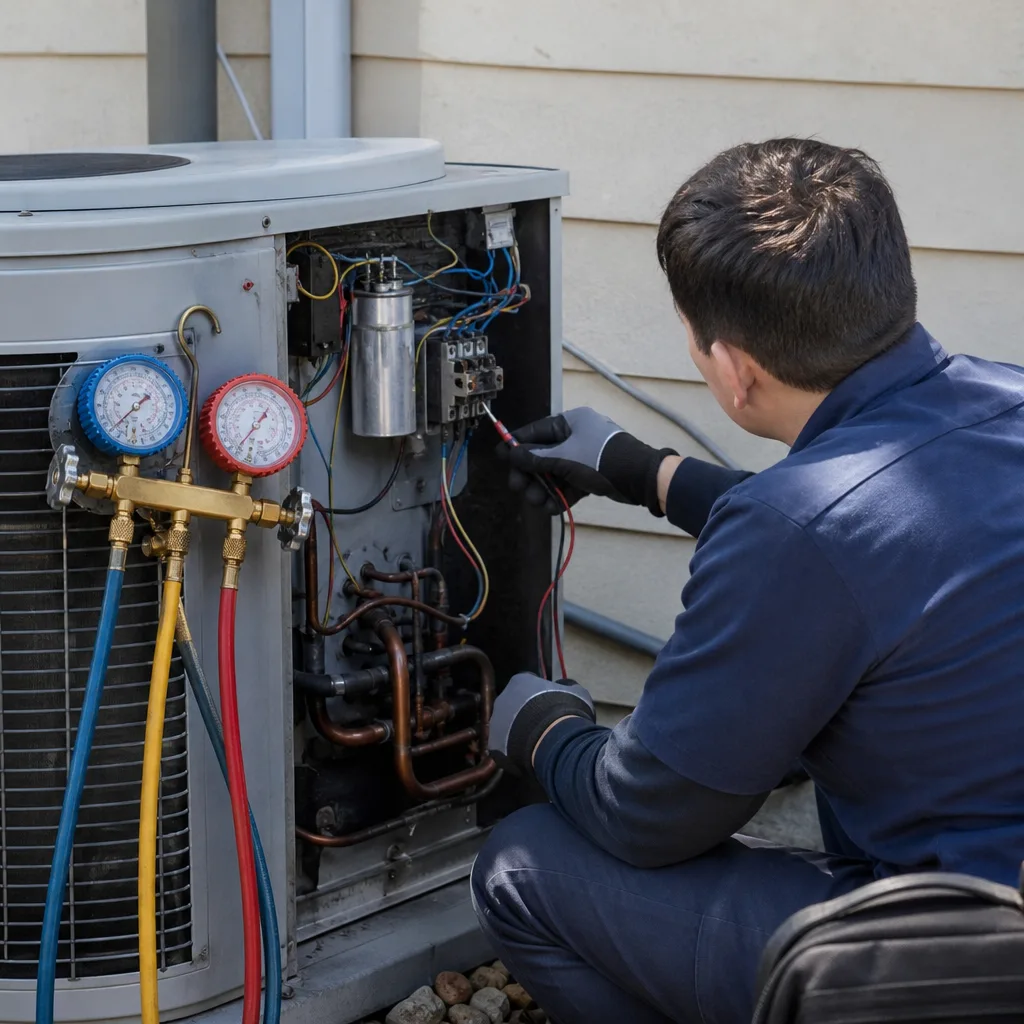
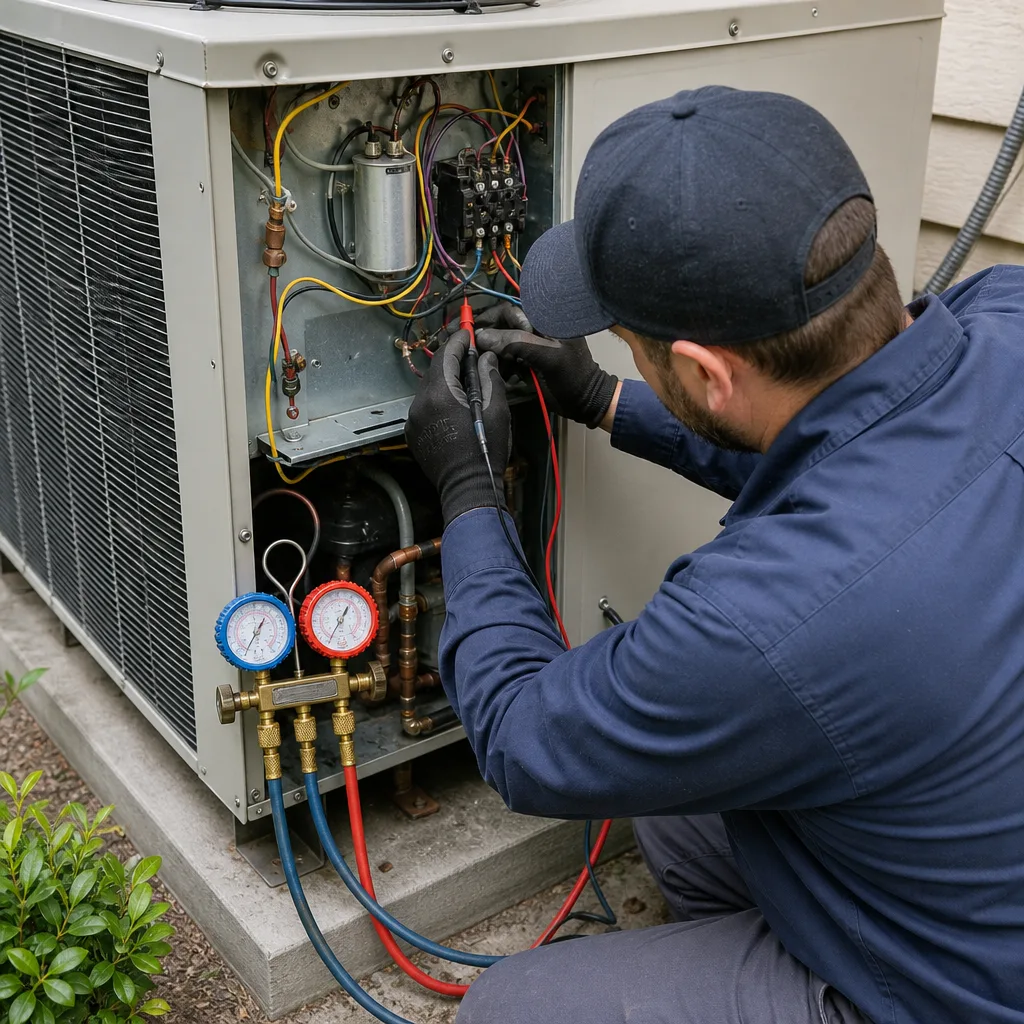
See the difference
 Before
 After
After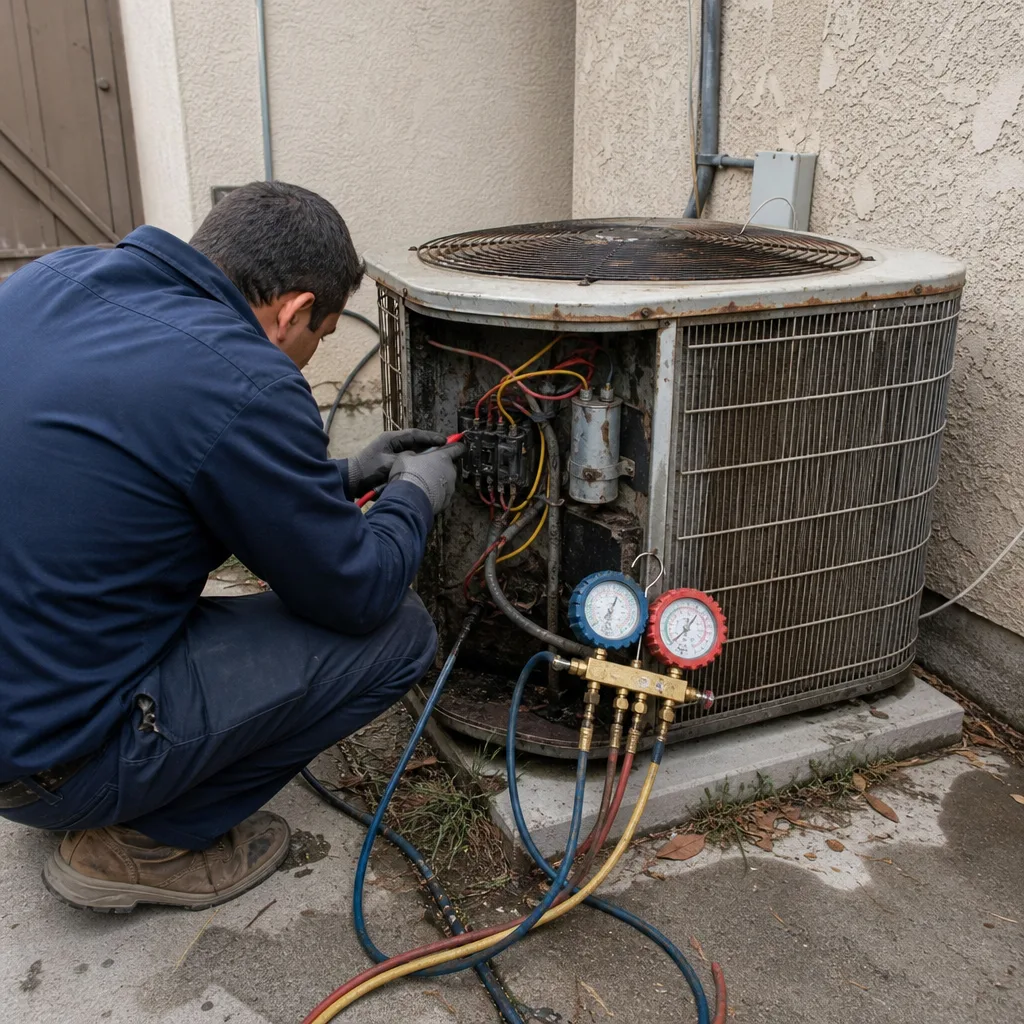 Before
 After
After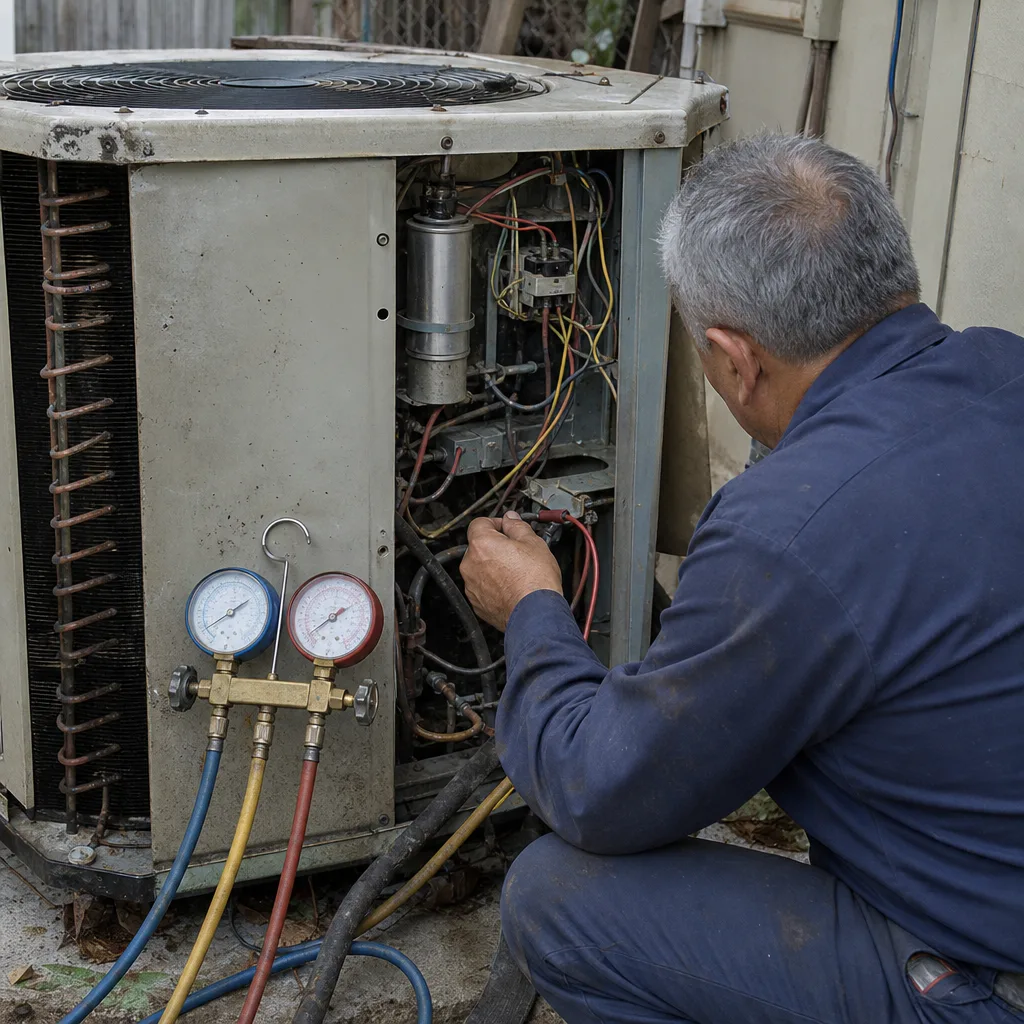 Before
 After
AfterWhen to Call a Professional
Permit requirements are the point where a good contractor earns their fee, and a corner-cutter gets exposed. If you’re planning an equipment replacement, a system conversion, or a substantial duct project, hire a licensed contractor who pulls permits as a matter of routine, files the Title 24 compliance paperwork, stands with you at inspection, and hands you the full record when the inspector signs off. If you’re buying a home with an older HVAC system, ask your inspector whether permits exist for the installed equipment, and if they don’t, factor retroactive permit costs into your offer. And if you’re a San Jose homeowner whose system needs repair or replacement, Cold Harbour Heating and Air San Jose offers free estimates. Call (669) 800-4179 and a live person answers, 24 hours a day, 7 days a week. AC Repair in San Jose and Furnace Repair in San Jose are where urgent problems get solved, permits and paperwork handled by people who do this every day.
Frequently Asked Questions
Yes. The City of San Jose requires a mechanical permit for any furnace replacement, even a like-for-like swap. The permit fee typically runs $160 to $220, and the final inspection verifies gas connections, venting, and electrical compliance. Call (669) 800-4179 for a replacement quote that includes the permit.
Title 24 is California’s energy efficiency standard that sets minimum equipment efficiency ratings, requires duct leakage testing for new or substantially modified ductwork, and mandates refrigerant charge verification. Your contractor files compliance forms with the permit, and you receive copies with the final inspection record.
In most cases, yes. A new AC condenser requires a dedicated circuit, a properly sized breaker, and a visible disconnect switch, all governed by the National Electrical Code. The electrical permit is filed separately from the mechanical permit and involves its own inspection.
For standard residential equipment replacements, the city typically issues the permit within one to three business days once the application is complete. Final inspections are usually scheduled within a week of the work finishing. Express same-day permits are available for some emergency replacements.
Buyers’ inspectors routinely flag unpermitted mechanical work, and lenders can delay or condition financing on resolution. The seller typically pays for a retroactive permit, inspection fees, and any corrections required to pass code. A $180 permit avoided this entire scenario.
Yes, we pull permits on every installation as a standard part of the job. The permit fee appears as a separate line item on the written estimate, and we handle the filing, the inspection scheduling, and delivery of your final inspection records. Call (669) 800-4179 for a free estimate.
The Bottom Line
California’s HVAC permitting rules are not bureaucratic theater. They are the legal mechanism that determines whether your equipment carries a valid manufacturer warranty, whether your insurer pays out after a covered loss, and whether a future buyer’s inspector passes your house or flags it for renegotiation. In San Jose, most HVAC equipment changes require a city mechanical permit, many require a companion electrical permit, and nearly all require Title 24 energy compliance documentation. The cost is modest, the process is well-worn, and the record you keep after the final inspection is worth far more than the fee you paid. Hire a contractor who treats permits as standard practice, not a favor. Get everything in writing. And keep the paperwork with your deed. Browse more guides & resources on protecting your home investment.
Need an honest answer about your specific project? Call (669) 800-4179 and a live person answers, any hour of any day. We’ll tell you what permits your job needs, what the city charges, and what the total will be before any work starts. Free estimates, written guarantees, and a company that has been serving San Jose since 2003.
Written by Victor Mancini, Owner at Cold Harbour Heating and Air San Jose, serving San Jose since 2003.